
 Updated
Over the years, I’ve studied Gold and Silver ETFs extensively and used this knowledge to inform my CFD trading strategies. If there’s one thing 18 years in the markets has taught me, it’s this: timing and discipline matter more than hype.
I traded currencies through financial crises. I’ve seen gold rally to record highs and then lose hundreds of dollars in weeks.
This guide isn’t a textbook. You’ll get practical examples of strategies, tools, and risk rules I follow in my trading.
Why focus on gold and silver ETFs? Because they sit at the crossroads of two powerful forces:
- The global precious metals market
- The liquidity and accessibility of the ETF structure
For traders, that means you can tap into safe-haven demand during crises and speculative momentum when markets run hot, all without storing a single ounce of metal.
Over the years, I’ve used these ETFs to hedge my currency trades, ride macro trends, and even take short-term breakout plays around key economic news. I’ve made mistakes too. Big ones.
But those losses taught me risk rules I still follow today.
In this guide, I’ll walk you through:
- How to choose the best gold and silver ETF for your strategy
- Generic examples of setups traders have used historically.
- Market timing considerations.
- How to manage risk so one bad move doesn’t wipe out months of gains.

These are not personal recommendations and are for educational purposes only. You should assess whether any approach is suitable for your circumstances or seek licensed financial advice.
Think of this as your field manual. Whether you’re in South Africa, London, or New York, the principles here work anywhere there’s liquidity. The difference is, you’ll get them explained by someone who’s been in the trenches.
So, let’s get started. And by the time you reach the end, you’ll understand the tools I have used in my trading, and how CFDs on these ETFs can be applied in your own strategies.
Gold and Silver ETFs: The Trader’s Weapon of Choice
When I first started trading gold and silver, I made the same mistake many new traders make — I bought the physical metal.
It felt exciting at first, but the reality hit quickly: high premiums, storage headaches, and the slow process of selling when I wanted to lock in profits. Learn why trading is often more efficient than holding physical metals.
That’s when I moved to gold and silver ETFs, and I haven’t looked back.
An Exchange Traded Fund (ETF) lets you buy or sell gold and silver on a stock exchange, just like you would a share. You don’t store the metal. Don’t pay for a safe. Simply trade a financial instrument that tracks the price of gold or silver almost tick-for-tick — without the settlement delays or leverage complexities that come with futures.
Why Gold and Silver ETFs Are Built for Traders
The best gold and silver ETFs combine three things traders need:
- Speed – You can enter and exit trades in seconds.
- Liquidity – Tight spreads and minimal slippage (understand how spreads affect trading costs).
- Flexibility – Go long, short, hedge, or scale in over time.
However, CFDs on ETFs also involve risks such as high volatility, tracking error, and the potential for rapid losses when trading with leverage.
Examples you should know:
- SPDR Gold Shares (GLD) – One of the largest gold ETFs globally, backed by physical bullion.
- iShares Silver Trust (SLV) – Tracks the price of silver with high liquidity.
- NewGold ETF (JSE: GLD) – Popular in South Africa, trades in rand (ZAR) and tracks spot gold prices without currency conversion costs.
While this guide discusses ETFs, Vantage only offers CFDs on these products. In South Africa, trading gold and silver ETFs via Vantage means trading CFDs on those ETFs, not owning the ETFs themselves.
This involves leverage, which can magnify both gains and losses. See our in-depth guide on CFDs vs ETFs to understand which instrument may suit your trading approach.
Gold and Silver ETFs vs. Physical Metals vs. Futures
| Featured | Gold/Silver ETFs | Physical Gold/Silver | Futures Contracts |
| Liquidity | High(Intraday trading) | Low-Medium(finding buyers takes time) | High(but with margin requirements) |
| Costs | Low expense ratio | Storage, insurance, dealer premiums | Margin costs rollover fees |
| Accessibility | Easy via brokerage account | Requires safe storage or a vault | Requires Futures account |
| Ability to Short | Yes | No | Yes |
| Leverage Availability | Yes(via Leveraged ETFs) | No | Yes |
| Settlement speed | Same day | Days- Weeks | Same day(But with risk of margin calls) |
Data compiled from World Gold Council (2023), ETF.com, and CME Group Futures Contract Specs (2024).If you’re new to futures, Vantage explains how they work in their gold futures trading guide, including the pros and cons compared to ETFs.
When Gold and Silver ETFs Outshine the Rest
History shows that gold and silver ETFs thrive in moments of global uncertainty:
- 2011 Eurozone Debt Crisis – Gold surged to $1,900; GLD rose over 28% in a year.
- 2020 COVID-19 Market Panic – Silver ETFs like SLV jumped more than 50% in five months.
- 2022 Inflation Spike – Gold ETFs became safe-haven magnets as interest rates climbed.
Note: These historical examples illustrate past price movements and are not indicative of future performance.
Regional Edge for South African Traders
If you’re based in South Africa, gold and silver ETFs like NewGold ETF (GLD) or Satrix Gold ETF let you:
- Trade in your local currency (ZAR)
- Avoid cross-border fees or currency risk on every trade.
- Access JSE-listed products with the same convenience as international ETFs.
For more on this, check Vantage’s South Africa trading guide for local insights and opportunities.
My Gold and Silver ETFs Selection Checklist
Whenever I choose an ETF, whether for gold, silver, or another commodity, I run through the same quick checklist:
- Average Daily Volume – At least 500,000 shares for smooth execution.
- Expense Ratio – Below 0.5% to keep costs low
- Tracking Error – Less than 1% compared to the spot price.
- Issuer Reputation – SPDR, iShares, Satrix, or other established providers
- Local Listing – For South African traders, check for JSE availability to trade in ZAR.
Prefer alerts tied to these drivers? Learn to apply gold signals.
Bottom line:
ETFs can offer the speed of forex, the perceived stability of commodities, and the accessibility of stock trading. That’s why they’ve become a standard approach for some traders.
However, they also carry risks, including volatility, tracking errors, and potential losses.
Understanding Gold and Silver ETFs Price Drivers
Most traders lose money here because they think gold just “goes up when the economy is bad.” It’s more complex than that. If you’re going to trade gold and silver ETFs successfully, you need to know what moves the price.
1. Inflation and Interest Rates
Gold has a long history as an inflation hedge. When the cost of living rises, and currencies lose purchasing power, investors pile into gold and silver to protect value.
- According to data from the US Bureau of Labour Statistics, in 2022, as U.S. inflation hit 40-year highs, SPDR Gold Shares (GLD) climbed over 9% between January and March.
- Silver, being more volatile, often outpaces gold during inflationary runs, but it also drops faster when inflation fears fade.
The flip side? Rising interest rates can pressure gold and silver prices lower because they don’t yield interest like bonds or savings accounts.
2. The U.S. Dollar’s Strength
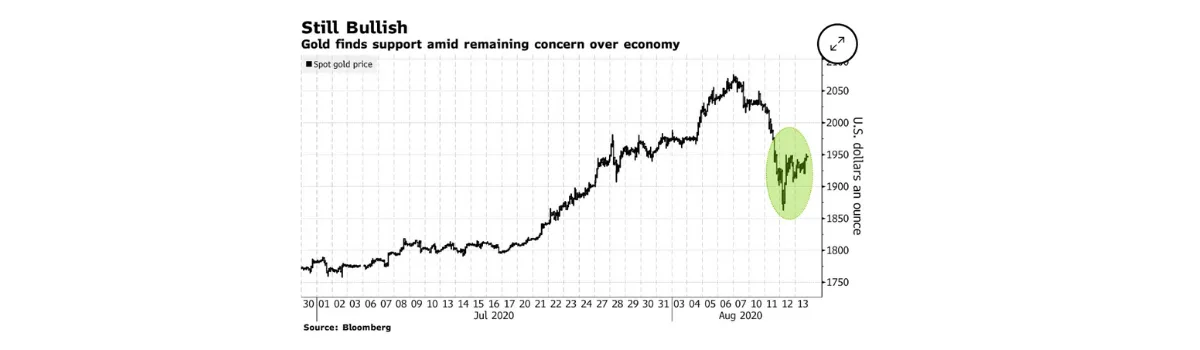
Gold and silver are priced in U.S. dollars worldwide.
When the USD strengthens, it takes fewer dollars to buy the same ounce of gold, which usually pushes prices down.
When the USD weakens, gold and silver often rise.
Example: In August 2020, Bloomberg reported that the U.S. Dollar Index dropped 6%, and gold surged to an all-time high of over $2,050 per ounce.
3. Geopolitical Events
Wars, political instability, or global crises tend to send gold and silver higher as investors seek safety.
- During the Russia–Ukraine conflict in early 2022, gold jumped 12% in just a few weeks.
- Silver ETFs also spiked, though silver’s industrial demand links made its rally slightly shorter-lived.
4. Stock Market Correlation
Gold often moves in the opposite direction to equities during major sell-offs.
However, it’s not always a perfect inverse correlation. During the March 2020 COVID crash, gold initially dipped with stocks as investors sold assets for cash, then rebounded sharply once panic selling eased.
5. The South African Rand Factor
If you’re trading JSE-listed gold and silver ETFs, you’re not just watching the metal’s global price — you’re also dealing with ZAR/USD exchange rates.
- When the rand weakens, South African gold ETFs can rise even if the global gold price stays flat.
- When the rand strengthens, it can dampen local ETF returns.
6. Seasonal Patterns
Gold and silver have historical seasonal demand cycles:
- January–February: Strong buying in Asian markets ahead of the Lunar New Year.
- September–November: Festive season demand in India boosts gold prices.
Being aware of these trends helps traders time entries with a higher probability of success.
Example: How traders may build Gold and Silver ETFs Trading Signals Around Price Drivers
In my own strategy, I combine fundamental triggers with technical analysis:
- Inflation trend → Look for gold ETF breakouts above resistance.
- Dollar weakening → Watch silver ETFs for faster percentage gains.
- Geopolitical shock → Enter staggered gold positions with stop-loss just below the last swing low.
This way, I’m not reacting blindly — I’m aligning trades with fundamental market drivers.
Note: CFDs are leveraged products and carry a high risk of loss. Past performance of ETFs or other assets is not indicative of future results. Apply proper risk management at all times.
Key Takeaway
Gold and silver ETFs don’t move in a vacuum.
If you understand the macro triggers and currency effects, you’ll know why your ETF is moving, and you’ll spot trading opportunities before the crowd.
The Trader’s Gold and Silver ETFs Selection Checklist
Picking the right ETF isn’t just a matter of taste.
It’s the difference between smooth trades and unnecessary losses.
Over my 10+ years trading gold and silver ETFs, I’ve learned that a bad product choice can ruin a good strategy.
Here’s the checklist I never skip, plus a real example of how to use it.
1. Liquidity: The Lifeblood of a Tradable Gold and Silver ETFs
For gold and silver ETFs, I only trade products with an average daily trading volume of at least 500,000 shares.
- Why it matters: Low liquidity means wider bid–ask spreads and higher slippage, costing you money on both entry and exit.
- High liquidity examples: SPDR Gold Shares (GLD), iShares Silver Trust (SLV)
- For South Africans: NewGold ETF (JSE: GLD) regularly trades millions of rand daily.
2. Expense Ratio: The Silent Profit Killer
Every ETF has a management fee, called the expense ratio, that is deducted annually from your holdings.
I target below 0.50% for gold/silver ETFs.
- GLD: 0.40%
- SLV: 0.50%
- Some niche ETFs charge over 1%, which can erode returns significantly over time.
3. Tracking Error: Accuracy is Everything
Tracking error measures how closely an ETF follows the actual price of gold or silver.
A good ETF keeps this within 1%.
Why it matters: If gold rises 10% but your ETF only rises 8% due to poor tracking, you’ve lost out despite being right.
4. Issuer Reputation: Trust the Big Players in Gold and Silver ETFs Trading
Issuers like SPDR, iShares, and Satrix have:
- Better risk controls
- Secure custodial arrangements for the underlying metal
- Transparent reporting audited by reputable firms
Poorly managed ETFs can face issues such as insufficient bullion backing,a risk you can avoid by sticking to established names.
5. Local Listing for South African Traders
For traders in South Africa, a JSE-listed ETF means:
- No cross-border transaction fees
- Trading in rand (ZAR) without currency conversion losses
- Access to domestic liquidity
Examples: NewGold ETF (GLD), Satrix Gold ETF.
Case Study: Applying the Checklist
Let’s compare SPDR Gold Shares (GLD) and NewGold ETF (JSE: GLD) side-by-side:
| Criteria | SDR Gold shares(GLD) | NewGold ETF(JSE:GLD) |
| Ave. Daily Volume | 6M+ shares(GLD) | Millions of rands daily |
| Expense Ratio | 0.4% | 0.4% |
| Tracking Error | < 0.5% | < 0.5% |
| Issuer | SPDR | ABSA Capital |
| Local Listing | No(USD-Based) | No(USD-Based) |
The Result:
- If I’m trading in USD, I’d pick GLD for its global liquidity.
- If I’m in South Africa and want ZAR trades, the NewGold ETF is the natural choice.
Risks of Ignoring the Checklist
- Low Liquidity: You might lose 0.5–1% per trade just on the spread.
- High Expense Ratio: Eats into long-term returns even if your trades are profitable.
- Poor Tracking: Can underperform the metals by several percentage points a year.
In 2018, I made the mistake of trading a low-volume silver ETF because it looked “cheap.”
Exiting a winning trade cost me 0.7% in slippage because there weren’t enough buyers in the market.
Since then, liquidity has been my #1 filter — even before cost or issuer.
Note: SPDR Gold Shares (GLD) and NewGold ETF are among the most liquid gold ETFs globally. Vantage offers CFDs referencing these ETFs, which means you are not buying the ETF itself but trading a derivative instrument that involves leverage and the associated risk of losses.
Proven Gold & Silver ETF Trading Strategies
Trading ETFs is about stacking small edges. I’ll walk you through four strategies I’ve used for gold (SPDR Gold Shares – GLD) and silver (iShares Silver Trust – SLV) over the years. Each comes with a checklist, clear entries and exits, and practical risk notes. Quick context: Gold reacts most to interest rates, inflation, USD strength, and risk sentiment. Silver moves on those factors as well, but adds industrial demand to the mix, according to the World Gold Council’s outlook.
Swing Trading (My Workhorse)
When it shines
Swing trading works best when gold or silver trends cleanly for days to weeks. Think post‑breakout follow‑through or macro themes that unfold over time.
Set‑up (trend + pullback):
- Trend filter: Price above 50‑day moving average and rising. Optional: ADX > 20 to confirm trend strength.
- Pullback: A trader could wait for a dip toward the 20‑day MA or the middle Bollinger Band.
- Momentum check: RSI stays in a “bull range” (roughly 40–80). Some traders avoid long entries when the RSI stays below 40 for days.
- Entry: A trader could consider buying on a strong up-day that closes back above the prior day’s high after a pullback.
- Stop: 1–1.5 × ATR(14) below the swing low.
- Exit: Scale out near recent swing high, or trail a stop under the 20‑day MA. If momentum fades (RSI loses 50 for multiple sessions), reduce risk or exit.
Why it works
Trends in precious metals often persist when macro drivers line up (policy, inflation, USD). You’re not chasing the first spike; you’re catching the second and third waves.
- Liquidity matters. Trade the high‑volume tickers (GLD, SLV; JSE: GLD for ZAR).
- Position size off volatility (ATR), not gut feel.
- News can interrupt trends. Check the calendar (CPI, FOMC) before entries.
News‑Driven Breakouts (Macro Catalyst Plays)
When it shines
Around CPI, PPI, NFP, and FOMC Meetings decisions. Also, during major geopolitical shocks. These events can reset expectations for rates and the USD—key inputs for gold and silver.
Set‑up (breakout bracket)
- Preparation: Mark the prior day’s high/low and the Asian/European session range.
- Bracket: A trader might place conditional orders just outside the range (e.g., buy-stop above, sell-stop below).
- Confirm: Let the first 1–3 minutes pass to avoid whipsaw. Check the 1‑minute CVOL/volatility context and the first candle close.
- Entry: Trigger on range break with a stop order.
- Stop: Just inside the broken range (tight). If it snaps back inside, get out.
- Take‑profit: Measured move equal to the range height, or scale out at 1R and trail for 2R. If a press conference flips the narrative, protect gains quickly.
Why it works
Surprises on inflation or rates can reprice metals fast. Breakouts harness that one‑sided order flow.
Risk Notes
- Slippage happens in fast markets. Size down.
- Avoid trading every event. No edge = no trade.
- If implied vol is already stretched, the move might underwhelm.
Mean‑Reversion (RSI + Bollinger)
When it shines
Choppy, range‑bound markets. After stretched moves into bands, not in strong trends.
Set‑up (fade to the mean)
- Market state: 20‑day MA flat or only slightly sloped. ADX low.
- Signal: Close outside a 20,2 Bollinger Band with RSI < 30 (for longs) or RSI > 70 (for shorts).
- Entry: Wait for a close back inside the band (failure to continue). One possible approach is to enter the next market opening.
- Stop: 1 × ATR beyond the extreme bar.
- Exit: Mid‑band (20‑day MA) first target; opposite band if momentum flips. If the price fails to re-enter the band within 1–2 sessions, consider it an invalid setup and stand aside.
Enhancements
- Use 40/60 RSI thresholds in trends (more conservative).
- Add a small divergence filter: price makes a lower low, but RSI makes a higher low.
Risk Notes
- Mean‑reversion breaks during macro shifts. Don’t fade right in front of CPI/FOMC.
- Silver is more volatile. Use a smaller size or wider stops.
Gold–Silver Pair Trade (Ratio Mean‑Reversion)
When it shines
When the gold-silver ratio (GSR) deviates significantly from its rolling average, it signals a potential shift in market sentiment. You’re betting on relative normalisation, not absolute direction.
Set-up(Pairs)
- Watch the ratio: GSR = Gold price / Silver price. Track a 1‑year rolling mean and standard deviation.
- Signal: If GSR is > +1 to +2σ above its mean, look for long silver / short gold. If <-1 to 2σ, look for long gold / short silver.
- Instruments: GLD vs. SLV (USD) or JSE: GLD vs. a JSE‑listed silver proxy if available. Keep the dollar weight neutral (balance exposures by dollar value or beta).
- Entry: Wait for a turn in the ratio (break of a short‑term ratio trendline or a lower high/higher low on the ratio chart).
- Exit: Some traders choose to close the spread when the ratio retraces to its mean or a pre-set partial target.
- Stop: Time‑based stop (e.g., 10–15 trading days) or a hard stop if the ratio keeps moving 0.5–1σ against you.
Why it works
Gold and silver share macro drivers, but silver’s industrial side makes it more volatile. Extreme gaps often compress as conditions normalize.
Risk notes
- Borrowing and short-term rules, along with costs, matter.
- Spread trades reduce market‑direction risk but not execution risk.
- Events specific to silver (such as industrial demand shocks) can keep the ratio stretched longer than expected.
Intraday ETF Playbook (Liquidity First)
When it shines
U.S. hours for GLD/SLV; JSE hours for NewGold ETF (JSE: GLD). You need tight spreads and steady volume.
Framework(Opening range + Session Bias)
- Define the Opening Range (OR): First 30–60 minutes.
- Bias: If price holds above OR high with rising volume, look for long pullbacks into VWAP or the 9/20 EMA. If price holds below OR low, flip the logic.
- Entry trigger: 1‑ or 5‑minute reversal candle at VWAP/EMA in the direction of the bias.
- Stop: Just beyond the swing point (keep it tight).
- Exit: Partial at prior intraday swing; remainder trails under 9/20 EMA. Close before the end of the day if you’re day‑trading to avoid gaps.
Risk notes
- Avoid trading the first 1–3 minutes; spreads and slippage are worse.
- Know the event calendar; a mid‑day CPI can nuke your intraday plan.
- Don’t force trades in low‑volatility sessions; conserve risk for A‑setups.
How I decide which strategy to use (Simple Decision Tree)
- Big catalyst today? Use News‑Driven Breakout. If no surprise, stand aside.
- Trend strong and orderly? Use Swing Trading on pullbacks.
- Flat, choppy market? Try Mean‑Reversion in bands.
- Gold vs. silver stretched? Consider the Pair Trade.
- Plenty of volume, clear opening structure? Intraday OR + VWAP play.
Position sizing and trade management (The Sanity Check)
- Risk per trade: Many traders cap it at a small percentage(%) of the account per setup (e.g., fractions of a percent).
- Volatility‑based stops: Size by ATR so a usual wiggle doesn’t stop you out.
- Trade less on silver: Same idea, bigger swings.
- Journal everything: Entry reason, exit reason, catalyst, and a screenshot. Patterns repeat.
What can go wrong (and how I limit damage)
- Chasing headlines: If you missed the breakout, let it go. FOMO losses add up.
- Ignoring spreads: Thin liquidity turns good ideas into bad fills.
- Trading into events: A textbook mean‑reversion can fail seconds before CPI.
- Overconfidence after a win streak: I cut size after outsized gains. Protect the month.
Reminder: This is for educational purposes only. Markets change. Edges decay. Treat these as starting points, then test, adapt, and document.
Timing the Market Like a Pro
In trading, timing is the difference between catching a smooth move and getting chopped to pieces.
With gold and silver ETFs, the right timing isn’t just about what day or month you trade; it’s about the session, the season, and the conditions.
Here’s how I approach timing after a decade in gold and silver ETFs
Best Time of Day to Trade Gold and Silver ETFs
For USD-denominated ETFs like GLD & SLV
The most active trading happens during U.S. market hours (9:30 a.m.– 4:00 p.m. ET), especially:
- 9:30–11:30 a.m. ET: Opening range volatility as both stock and futures markets overlap.
- 1:30–3:30 p.m. ET: Gold/silver futures on COMEX enter their final hours, often sparking momentum moves.
Why? Liquidity is highest when the U.S. stock market, COMEX metals futures, and London OTC markets overlap, according to CME Group gold trading hours.
For JSE-listed gold ETFs like the NewGold ETF (GLD)
- JSE market hours: 9:00 a.m.–5:00 p.m. SAST.
- Most volume comes in the first two hours after the open and the last hour before close, mirroring ZAR/USD forex activity.
Best Days of the Week
Gold and silver tend to see heavier flows mid-week, often around macro data releases like Wednesday’s FOMC minutes or Thursday’s jobless claims.
Historically, Mondays can be quieter unless significant weekend news breaks.
Seasonal Patterns You Can Use
Gold and silver both show seasonal demand cycles driven by cultural and industrial buying patterns:
- January–February: Strong Asian demand ahead of the Lunar New Year.
- September–November: The Indian festival and wedding season lifts gold demand.
- July–August: Historically softer for gold, but silver sometimes rallies on industrial restocking.
Seasonal demand may influence market activity, but it does not guarantee outcomes. Always apply proper risk management.
Timing Around Economic Data
Some of the most significant ETF moves happen in the minutes or hours after major macro reports:
- CPI & PPI: Inflation reports can shift Fed rate expectations in seconds (U.S. Bureau of Labor Statistics).
- Nonfarm Payrolls (NFP): Big surprise? Expect USD and gold/silver to react sharply.
- FOMC decisions: A rate cut or dovish statement can ignite safe-haven buying.
- CPI & PPI: Inflation reports can shift Fed rate expectations in seconds (U.S. Bureau of Labor Statistics).
- Nonfarm Payrolls (NFP): Big surprise? Expect USD and gold/silver to react sharply.
FOMC decisions: A rate cut or dovish statement can ignite safe-haven buying.
Avoiding Low-Liquidity Traps when Trading Gold and Silver ETFs
Just because the market is “open” doesn’t mean it’s tradable:
- Pre-market and after-hours for GLD/SLV can have wide spreads and low volume.
- Around major holidays (e.g., U.S. Thanksgiving, Christmas week), liquidity thins, spreads widen, and slippage increases.
- Late summer (August) can see quieter flows unless macro events shake things up.
If you must trade during thin periods, reduce size and expect less follow-through.
Matching Timing to Your Strategy when Trading Gold and ETFs
Just because the market is “open” doesn’t mean it’s tradable:
- Pre-market and after-hours for GLD/SLV can have wide spreads and low volume.
- Around major holidays (e.g., U.S. Thanksgiving, Christmas week), liquidity thins, spreads widen, and slippage increases.
- Late summer (August) can see quieter flows unless macro events shake things up.
If you must trade during thin periods, reduce size and expect less follow-through.
Matching Timing to Your Strategy in Gold and Silver ETFs Trading
Here’s how I pair timing and strategy:
- Swing trading: Enter during regular high-liquidity hours, often on daily chart signals confirmed intraday.
- Intraday trading: Focus on the first and last two hours of the main session.
- News-driven plays: Only during major economic releases, with tight risk.
- Pair trades: Timing is less about the clock, more about the gold/silver ratio extremes.
Key Takeaway
Trading gold and silver ETFs well isn’t just about picking the right product; it’s about trading at the right time, in the right market environment.
High-liquidity hours help reduce costs and improve fills. Seasonal demand adds a tailwind for swings. And knowing when to stand aside is just as valuable as knowing when to pull the trigger.
Risk Management for Gold and Silver ETF Traders
In gold and silver ETF trading, survival comes before profit.
The market will always hand out opportunities, but if you can’t control losses, you won’t be around to take them.
Over the years, trading products like SPDR Gold Shares (GLD), iShares Silver Trust (SLV), and the NewGold ETF (GLD) on the JSE, I’ve applied this knowledge to trading CFDs on these instruments.
Position Sizing Based on Volatility
I never size trades by “gut feel.”
Instead, I use volatility-based sizing to maintain consistent risk across different market conditions.
A simple approach:
- Find the 14-day Average True Range (ATR) of the ETF (Investopedia ATR guide).
- Set your stop-loss at 1–1.5× ATR from your entry price.
- Adjust your position so the loss at that stop equals your chosen risk percentage (e.g., 1% of your account)
This keeps your risk per trade steady, whether the market is calm or swinging wildly.
Stop-Loss Placement That Makes Sense
A stop should go where the trade idea is proven wrong, not at some random round number.
For swing trades in gold ETFs, that might be below the last swing low.
For silver, which moves faster, I often give it slightly more room.
I avoid placing stops right at obvious support/resistance where market makers might hunt liquidity.
Using technical levels along with ATR distance helps avoid premature exits.
Beware of Leverage — It Cuts Both Ways
Leveraged ETFs, such as 2× Gold Miners ETFs or ProShares Ultra Silver, can amplify both gains and losses, making them generally more suited to experienced traders who understand the high risks involved.
The SEC warns that leveraged ETFs are designed for short-term trading and can decay in value if held too long due to daily rebalancing. I’ve seen traders double their accounts in weeks with leverage, only to lose it all just as fast.
If I use leverage, it’s only in tightly controlled intraday or short swing plays with predefined exits.
Hedging: Protecting the Downside
Sometimes the best defence is to hold an opposing position in another instrument.
For example:
- If I’m long GLD and worried about a sudden USD rally, I might take a small short in gold futures or buy a USD ETF.
- South African traders can hedge NewGold ETF exposure by trading USD/ZAR in forex, because a stronger rand often dampens local gold ETF prices
Hedging may help manage exposure, but it does not eliminate risk, and losses are still possible.
Risk per Trade and Overall Exposure
A standard professional benchmark is to put no more than 1-2% of account equity per trade at risk (CME risk guidelines).
That way, even a string of losses won’t cripple your account. I also limit total portfolio risk; if several positions are correlated (e.g., GLD, SLV, and gold miners), I treat them as one risk bucket.
Journaling and Reviewing Trades
One of my most significant breakthroughs came when I started keeping a detailed trade journal.
For each trade, I log:
- Entry/exit price and reason
- Market context (macro events, technical setup)
- Size, stop, and target
- Outcome and lessons learned.
This is how I spotted patterns in my own mistakes, like cutting winners too early or trading low-volume silver ETFs during news spikes.
Key Takeaway
Risk management in gold and silver ETFs isn’t about being perfect; it’s about being consistent.
Position sizes according to volatility, place stops logically, use leverage carefully, and review every move.
If you manage risk well, you give your strategies time to play out.
Common Mistakes That Wipe Out Gold and Silver ETF Traders
After more than a decade trading gold and silver ETFs, I can tell you: the biggest account blow-ups don’t usually come from bad markets, they come from bad habits.
Here are the mistakes I’ve seen (and sometimes made) that can quietly drain an account, plus how to avoid them.
Trading Illiquid Gold and Silver ETFs
Not all ETFs are created equal. Some, especially niche or new launches, trade so little.
Low liquidity means wider bid–ask spreads and higher slippage, turning a winning idea into a losing trade. If you’re not sure about an ETF’s volume, check the daily trading volume and bid–ask spread before placing an order.
For example, SPDR Gold Shares (GLD) trades millions of shares daily, while a small regional ETF might only see a few thousand. On the JSE, the NewGold ETF (GLD) offers the liquidity most South African traders need, but always check before trading.
Ignoring Trading Platform Restrictions
Some ETFs may be “unavailable for trade” on specific platforms due to regulatory, liquidity, or issuer restrictions.
For example, Standard Bank’s online share trading platform has occasionally flagged certain ETFs as restricted during periods of high volatility or when market makers withdraw liquidity. If you’re using a CFD broker like Vantage, check available products before planning trades, as not all instruments may be accessible at all times.
Nothing is worse than planning the perfect trade only to find out you can’t execute it.
Overtrading in Low-Volatility Periods
Just because the market is open doesn’t mean there’s a good trade.
In slow periods, such as mid-August or during major holidays, gold and silver ETFs can drift sideways, leading to wider spreads. This tempts traders into forcing trades, often with poor entries. If market hours and liquidity don’t provide clean setups, it’s better to stand aside.
Holding Leveraged ETFs Too Long
Leveraged ETFs, such as 2× or 3× gold/silver products, can be tempting.
But because they reset daily, their value can decay if held for extended periods (see the SEC’s explanation on leveraged ETFs).
I’ve seen traders hold a leveraged silver ETF through a sideways market, only to watch it bleed value day after day despite no significant price drop in silver itself.
Ignoring Currency Impact
If you’re trading South African gold ETFs in rand, your profit isn’t just about gold’s global price — it’s also about the USD/ZAR exchange rate.
A stronger rand can reduce local ETF prices even if gold is flat globally.
This is why I always check both the commodity and currency charts before placing a trade.
Chasing Price Without a Plan
Seeing a gold or silver spike and jumping in without a defined entry, stop-loss, and target is a recipe for disaster.
Successful traders have a plan before they click “buy” — they don’t make it up on the fly.
If you’re not sure where to start, Vantage’s technical analysis guide is an excellent resource for building structured entry and exit points.
Key Takeaway
Most ETF trading mistakes are avoidable if you focus on liquidity, know your platform’s rules, time your trades, and respect leverage and currency risks.
Every mistake you avoid is capital you can use on a higher-probability setup tomorrow.
Tools & Platforms I Recommend for ETF Trading
Over the years, I’ve learned that having the right tools and trading platform can make the difference between a smooth trade and a frustrating one.
If you want to trade gold and silver ETFs efficiently, you need:
- A reliable broker that offers the products you want
- Real-time market data and charting tools
- A way to scan and filter ETFs for your strategy
Here’s my toolkit, the same one I use in my own trading.
If you’ve made it this far in this guide, you already know more than most new ETF traders.
The next step is putting that knowledge to work, but with a platform that gives you the tools, liquidity, and flexibility you need.
You can explore a live trading account with Vantage Markets or use a free demo account to practise gold and silver ETF strategies.
Trading Platform
For global access to gold and silver ETFs via CFDs, traders may consider Vantage Markets, which offers CFDs on major ETFs like SPDR Gold Shares (GLD) and iShares Silver Trust (SLV).
The advantage of trading ETF CFDs is that you can go long or short, trade with leverage, and start with a smaller capital outlay compared to buying the complete ETF unit.
For South African traders, JSE-listed gold ETFs such as NewGold ETF (GLD) can be traded directly through a local brokerage account, but if you want more flexibility and exposure to global products, a CFD broker like Vantage can expand your options.
Charting Tools
I do most of my chart work on TradingView, which offers:
- Live ETF price charts
- Technical indicators like RSI, Bollinger Bands, and ATR
- Custom alerts for breakout levels
If you use MetaTrader 4 or 5, you can also chart and trade ETFs directly inside the platform, keeping your execution and analysis in one place.
ETF Screeners
To filter the thousands of ETFs available globally, I use:
- ETF.com Screener: lets you sort by asset class, liquidity, expense ratio, and more.
- Morningstar ETF Screener: useful for performance history and issuer trust ratings.
These tools help me find the best gold and silver ETFs for my strategy before I even open a chart.
Economic Calenders
News events drive big ETF moves, especially in gold and silver.
I check the Vantage Economic Calendar daily to see when key events like CPI, NFP, and FOMC meetings are scheduled.
This way, I know whether to expect volatility or avoid trading altogether.
Risk Management Tools
Inside the Vantage platform, I use built-in stop-loss and take-profit orders to protect trades.
I also calculate position size based on ATR (Average True Range), a technique explained in Vantage’s risk management guide.
Key Takeaway:
Trading without the right tools is like racing without a steering wheel — you might be moving, but you’re not in control.
Set yourself up with a solid platform like Vantage Markets, use reliable charting and screening tools, and always keep an economic calendar handy.
Final Thoughts from 18 Years of Trading Gold & Silver ETFs
After nearly two decades in the markets, with more than 10 years focused on gold and silver ETFs. I’ve learned that success in this niche isn’t about chasing every tick. It’s about mastering timing, risk, and discipline. The markets will continually change.
News will surprise you. Prices will sometimes move in ways that make no sense in the moment.
But the traders who last, and win, are the ones who:
- Stay patient when others overtrade
- Stick to tested strategies instead of chasing hype.
- Use the right tools to read the market before acting.
- Protect capital first, profits second.
Why I Still Trade Gold and Silver ETFs Today
Gold and silver ETFs have a unique advantage: they combine the liquidity of stocks with the safe-haven appeal of precious metals.
They allow you to capitalize on trends without the complexity of futures contracts or the hassle of storing physical bullion.
For South African traders, CFD trading on the NewGold ETF provides local market exposure without holding the underlying ETF.
But with a CFD broker like Vantage Markets, you can tap into global gold and silver ETFs via CFDs, trade them long or short, and use leverage responsibly. That flexibility is why I keep them in my guide year after year.
What I’ll Tell My Younger Self
If I could go back to my first year trading gold and silver ETFs, I’d say:
- Stop overcomplicating it: Focus on one or two strategies, but remember that no strategy guarantees profits and all involve risk.
- Respect volatility: it’s both an opportunity and a risk.
- Review your trades weekly: learn what’s working and cut what’s not.
- Avoid the noise: most “hot tips” are late by the time you hear them.
- Always have an exit plan before you enter a trade.
Frequently Asked Questions on Gold and Silver ETF Trading
These are the questions I hear most from traders about gold and silver ETFs, and my direct, fact-backed answers.
How do I trade a gold ETF in South Africa?
While gold ETFs like NewGold (GLD) and Satrix Gold are listed on the JSE, Vantage Markets offers CFDs on these ETFs, allowing traders to go long or short and trade with leverage without owning the underlying ETF. Learn more in Vantage’s guide to trading commodities.
Which gold ETFs are commonly traded in South Africa?
Many traders use the NewGold ETF for ZAR-denominated exposure or SPDR Gold Shares (GLD) for international exposure. This information is for educational purposes and is not investment advice.
It comes down to whether you want local-currency convenience or global-market exposure.
Is a Gold ETF a good Investment?
A gold ETF can be a good hedge during inflation, currency weakness, or market uncertainty.
However, it’s not risk-free. Gold prices can fall, and ETFs carry market risk.
I consider them a way to diversify my portfolio rather than a main holding.
Read Vantage’s gold trading strategy guide for more insights.
What is the difference between a gold ETF and gold futures?
Gold ETF – Trades like a stock, tracks gold’s price, no expiry, no margin calls.
Gold Futures – Exchange-traded contracts with expiry dates, high leverage, and margin requirements. If you’re not sure which is right for you, see Vantage’s 7 Types of ETFs and How To Trade Them
How much money do I need to start trading gold or silver ETFs via CFDs?
This depends on your broker’s minimum deposit.
With a CFD broker like Vantage, you can start with a few hundred USD, whereas buying full ETF shares on the JSE may require more, depending on the share price.
Can I short-sell a gold or silver ETF?
Yes. If you trade via CFDs or have a margin-enabled account with your broker.
CFDs from Vantage make it easy to short both gold and silver ETFs without owning them.
Do gold and silver ETFs pay dividends?
Most physically backed ETFs do not pay dividends. Some miner-focused ETFs may pay dividends, but CFDs on these ETFs do not entitle you to such payouts.
Resources for Gold & Silver ETF Traders
Vantage Markets Learning Hub
- How to Trade Commodities – Understand the basics of commodity markets.
- Gold Trading Strategy – Strategies for gold across spot, futures, and ETFs.
- Risk Management Guide – How to protect capital and control losses.
- Technical Analysis Guide – Learn chart reading and technical setups
Market Data and Tool
- SPDR Gold Shares (GLD) – The largest global gold ETF.
- iShares Silver Trust (SLV) – The benchmark silver ETF.
- NewGold ETF (JSE: GLD) – South Africa’s leading gold ETF.
- ETF.com Screener – Filter ETFs by asset class, liquidity, and cost.
- Vantage Economic Calendar – Track market-moving events.
ETF Trading Glossary
Ask Price: The minimum price a seller is willing to accept for an ETF.
Bid Price: The maximum price a buyer is willing to pay for an ETF.
CFD (Contract for Difference): A derivative that lets you trade ETF price movements without owning the ETF itself. More on CFDs vs ETFs.
Commodity ETF: An ETF that tracks the price of a commodity, such as gold or silver.
Expense Ratio: The annual fee charged by an ETF issuer, expressed as a percentage of assets.
Leveraged ETF: An ETF that uses derivatives to amplify returns, usually by 2× or 3× daily.
Liquidity: This is how easily you can buy or sell an ETF without affecting its price.
NAV (Net Asset Value): The total value of an ETF’s assets minus liabilities, divided by the number of shares.
Spread: The difference between the bid and ask prices of an ETF.
Tracking Error: The difference between the ETF’s performance and the performance of its underlying asset or index.
Volatility: How much the price of an ETF fluctuates over time.
RISK WARNING: CFDs are complex financial instruments and carry a high risk of rapid loss of money due to leverage. You should ensure you fully understand the risks involved and carefully consider whether you can afford to take the high risk of losing your money before trading.
Disclaimer: The information is provided for educational purposes only and doesn’t take into account your personal objectives, financial circumstances, or needs. It does not constitute investment advice. We encourage you to seek independent advice if necessary.
The information has not been prepared in accordance with legal requirements designed to promote the independence of investment research. No representation or warranty is given as to the accuracy or completeness of any information contained within.
This material may contain historical or past performance figures and should not be relied on. Furthermore, estimates, forward-looking statements, and forecasts cannot be guaranteed. The information on this site and the products and services offered are not intended for distribution to any person in any country or jurisdiction where such distribution or use would be contrary to local law or regulation.
References
-
World Gold Council (WGC) –
https://www.gold.org
Global authority on gold supply, demand, investment trends, and ETF flows. -
Silver Institute –
https://www.silverinstitute.org
Provides reliable statistics and market research on silver usage and investment. -
Bloomberg – Commodities & ETFs –
https://www.bloomberg.com/markets/etfs
Covers live ETF performance, market news, and macroeconomic drivers. -
Investopedia – Gold ETFs Explained –
https://www.investopedia.com/terms/g/goldetf.asp
Educational resource for definitions, strategies, and mechanics of ETFs. -
Morningstar ETF Research –
https://www.morningstar.com/etfs
Independent ETF ratings, analysis, and performance tracking. -
ETF.com –
https://www.etf.com
Comprehensive ETF database, analysis, and expert commentary. -
U.S. Securities and Exchange Commission (SEC) – ETFs –
https://www.sec.gov/spotlight/etf
Official regulatory perspective on ETF structures, risks, and protections. -
London Bullion Market Association (LBMA) –
https://www.lbma.org.uk
Standards body for precious metals markets — pricing, benchmarks, and custody. -
Kitco News – Precious Metals Market –
https://www.kitco.com
Market commentary, price updates, and expert insights on gold and silver. -
Reuters – Commodities & Metals –
https://www.reuters.com/business/commodities
Timely coverage of commodity and ETF news globally.