
 Updated
USD/JPY is a major forex pair. It tracks the US dollar against the Japanese yen. The forex market runs 24 hours a day, five days a week. Still, activity rises and falls as global sessions open and close. This guide outlines USD/JPY trading hours in South Africa and when the pair tends to move most.
In this guide, we’ll examine USD/JPY trading hours in South Africa from a local perspective. Many people keep 08:00–17:00 work hours, plus commuting and family time. Load shedding and internet outages can also affect timing and trade flows.
As a result, there is no single “perfect” time that works for everyone.
Instead, this article maps common session behaviour in SAST, identifies likely high-activity windows, and outlines how to find a personal best time.
Risk note: Trading the USD/JPY currency pair is high risk. This is education only, not financial advice.
How USD/JPY Trades – 24/5 Market and Session Structure
Forex trading runs 24 hours a day, five days a week. This happens because markets open and overlap across time zones.
As the week moves forward, order flow often follows a pattern. Activity typically starts in Asia, then builds in Europe. After that, the US session adds another wave of volume.
These shifts help explain the USDJPY trading sessions in real terms.
First, the Tokyo session matters because yen-based flow is active. News from Japan can shape the early tone and direction. Then, London hours often bring deeper liquidity in major pairs. Spreads can tighten as more banks and funds join. Soon after, the London–New York overlap becomes the key window. Many market guides describe it as the day’s most liquid period. During this overlap, USD/JPY may react strongly to US data.
Risk note: Trading forex/CFDs is high risk. This guide is for education only. It is not financial advice or a promise of profit.
Forex Market Sessions in UTC and South African Time (SAST)
South Africa uses SAST (UTC+2) year-round, with no daylight saving time. Even so, London and New York do change clocks, so session times can shift by about an hour during those periods.
Key FX sessions – approximate hours (UTC & SAST)
Times below are approximate and can shift with daylight saving changes.
| FX session | Approx. hours (UTC/GMT) | Approx. Hours (UTC/GMT) |
| Tokyo | 00:00 – 09:00 | 02:00 –11:00 |
| London | 07:00 –16:00 | 09:00 –18:00 |
| New York | 13:00 – 22:00 | 15:00 – 00:00 |
| London–New York overlap | 13:00 –16:00 | 15:00 –18:00 |
How these sessions fit into a typical South African day
Tokyo often shows up in the early morning, before the workday starts.
London falls within core working hours, when attention may be divided.
Then New York begins mid-afternoon and runs into the evening.
The 15:00–18:00 SAST overlap can align with after-work hours, but energy levels, family plans, and load-shedding can affect what’s practical on any given day.

How USD/JPY Typically Behaves in Each Session (From an SA Perspective)
Tokyo Session – JPY Home Ground in the Early SAST Hours
From a South African view, Tokyo often lands in the early morning. It is roughly 02:00–11:00 SAST, with minor seasonal shifts.
This is the Yen’s home session. So, USD/JPY can respond fast to Japan’s releases. Examples include inflation, wages, and growth prints. Bank of Japan meeting days can also bring sudden jumps. Even when Tokyo is calm, it can set the day’s tone. A steady drift can form early, then carry into Europe. On the other hand, some moves fade once London opens.
For many South Africans, the main trade-off is practical. Early starts may clash with sleep, school runs, and commuting. Load-shedding and unstable internet can add another layer. Still, the Tokyo window can feel more “orderly” at times, since it is less crowded than the overlap hours.
Learn more about forex sessions in South African time.
London Session – European Flows and Cross-Asset Moves
Next comes London, often seen as a liquidity anchor. More banks and funds tend to smooth pricing. London also brings a wider risk mood.
Equities, bonds, and headline risk can start to steer direction. USD/JPY may react as rates and risk appetite shift. From an SA Workday perspective, this session often falls within office hours.
That can make it an applicable period for planning and review. Charts, levels, and key events for later can be mapped out.
This framing can feel more realistic than constant rapid trading, especially during meetings or when attention is split.
London–New York Overlap – High-Activity Window in Late Afternoon and Early Evening
Later, the London–New York overlap often becomes the day’s hotspot. Many session guides link this window with substantial volume and sharp moves.
For USD/JPY, the driver is often the US side. Primary US data and shifts in yields can move the dollar quickly. Global risk flows can also spill into the pair in this window. In South Africa, this period can fall after work. So, time at the screen may be easier to find.
At the same time, fatigue after a long day is real. Fast moves can feel exciting, but they can also increase stress.
Load-shedding schedules and network dips can matter most here, since the market may move quickly during news bursts.
Late US and Very Quiet Periods – Times to Be Extra Cautious
As New York winds down, liquidity often thins out. Spreads can widen, and prices can turn choppy.
In South Africa, that can push activity into the late at night. For newer traders, late hours often lead to reduced focus and more errors. So late-night trading feels harder to manage in practice.
Do Certain Days of the Week Matter for USD/JPY?
As mentioned in the introduction, USD/JPY trades five days a week, yet the calendar still matters. Many market notes point to a weekly rhythm in the forex market. Early in the week, Monday can feel slower. Liquidity often rebuilds after the weekend pause.
By mid-week, Tuesday and Wednesday are often more active. Then Friday can bring two moods at once.
Big news may trigger sharp moves, but price action can become uneven as the weekend approaches. These are observations, not rules. USD/JPY can trend hard on a Monday. It can also stall mid-week when news is light.
This is why many traders treat time data like a diary. A simple log by day of the week and time of day can reveal patterns that align with real results, not theories. It also helps to remember that markets take turns leading. Some days, EUR/USD grabs attention in European hours.
On other days, gold may reflect shifts in risk mood. USD/JPY can react when rates and risk pricing change.
USD/JPY market activity across different sessions
Different Schools of Thought on USD/JPY Timing
Different Schools of Thought on USD/JPY Timing
People often talk about a single “best” window for USD/JPY. In reality, timing decisions fall into three main categories.
Tokyo-focused traders watch the yen on home turf. In SAST, that often means very early mornings.
The upside is precise yen flow and clean reactions to Japanese news. The downside is also apparent: sleep deprivation, school runs, and commute stress. Liquidity can also feel uneven before Europe fully joins.
The London–New York overlap is a period of generally higher global market activity, which can lead to faster price movements.
US data, yields, and risk mood can move USD/JPY in minutes. The trade-off is speed. Moves can be sharp, and mistakes can feel costly.Late-US specialists prefer the quieter stretch after London closes. The upside can be fewer headline shocks and a slower pace.
The downside is thinner liquidity and wider spreads at times. In South Africa, it also lands late at night.
Market timing considerations from a general perspective
For many South Africans with day jobs, time is the fundamental constraint. A short, planned window can be used to observe market activity.
It sits closer to after-work hours, before the day fully ends. This can help protect family time and reduce screen fatigue. In other words, USD/JPY activity can vary across sessions and may align differently with individual schedules. Fit for schedule, focus, and the market’s usual activity level.
Methodology and Why You Still Need to Test It Yourself
Most timing guidance comes from repeat market patterns. The Tokyo session often reflects Japanese market activity, and the overlap can coincide with global risk and US data releases. The late US session may be thinner and more variable.
Still, “tends to” is not a promise. News calendars change, and liquidity shifts around holidays. Even spreads can vary by broker and account type.
As a result, many traders first compare windows using a demo account. A common approach is logging 30–50 trades across different windows. Results often appear more transparent when time of day and day of week are tracked together.
Example Daily Schedules for USD/JPY Traders in South Africa
The USD/JPY currency pair can look very different depending on the hour. That matters even more in South Africa, where SAST remains on UTC+2 year-round.
This section presents three example daily trading schedules for USD/JPY from an SA perspective.
These are purely illustrative examples and should not be interpreted as trading guidance. Instead, they show how some traders structure time blocks around real-life schedules. That includes work hours, family time, and the practical impact of load-shedding.
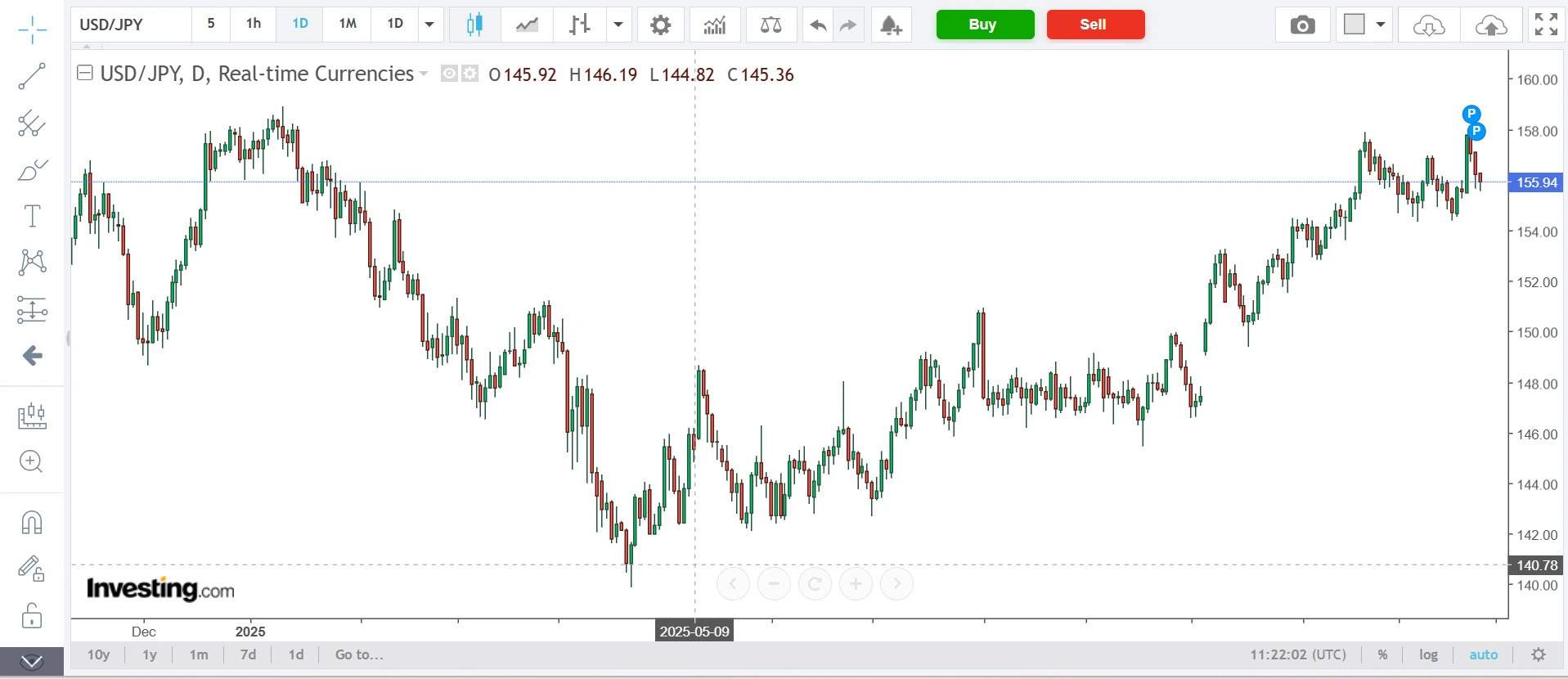
To keep the examples grounded, the schedules reference common session windows, and a quick check of a USD/JPY live chart is recommended before any trading focus.
Key US and Japan events that move USD/JPY.
USD/JPY often moves the most when the “rates story” shifts quickly.
That is why US and Japan events can matter more than random headlines.
On the US side, NFP, CPI, FOMC decisions, and Fed speeches tend to trigger the most enormous bursts. These usually occur during the New York session or the London–New York overlap, which aligns with late afternoon and early evening in South Africa.
When the surprise is considerable, price can jump, spreads can widen, and follow-through can be quick. On the Japan side, BOJ meetings and major Japan releases can set the tone early.
Think inflation, wages, GDP, and big activity prints.
These events most often affect the Tokyo session, which lands in the early SAST hours.
Even when the first move fades later, it can still shape the day’s key levels.
Trading vs. avoiding major news windows
Some traders choose to avoid news windows entirely. That choice can reduce stress, surprise moves, and bad fills. It also makes results easier to compare across regular sessions.
Others focus on news, but treat it as a different game. During big releases, slippage becomes a real risk.
So do sudden spread changes and fast reversals. In practice, many news traders use a smaller size and accept that fills may differ from the plan. For timing and headlines, sources like FXStreet, ForexLive, Bloomberg, and Investing.com are often used as references.
Examples: FXStreet’s calendar and Investing.com’s economic calendar.
Time-of-day psychology: fatigue, FOMO, and revenge trading
Trading decisions change when energy drops. After-work fatigue can make fast markets feel louder than they are.
Late-night trading can lead to slower reaction times and reduced focus. FOMO often shows up after a missed move. Revenge trading frequently follows a loss that feels “unfair.” Both can turn timing into a trap. A clear “no-trade” schedule can help reduce these patterns. Many traders keep firm off-hours, then review the market the next day.
How to Find Your Best Time to Trade USD/JPY
The “best” time for USD/JPY often depends on your trading strategy.
A simple journal helps turn that into a measurable outcome.
Instead of logging only profit and loss, the goal is to track context.
Here is a plain template that fits most styles:
- Date (SAST):
- Day of week:
- SAST window: (e.g., 05:30–06:15, 17:30–18:30)
- Session label: (Tokyo, London, New York, Overlap)
- Setup name: (breakout, pullback, range fade, news reaction)
- Reason for entry: (level, trend, data, risk mood)
- Risk used: (small/medium/large, or % of account)
- Outcome: (win/loss/scratch)
- Notes: (spread, speed, slippage, focus, distractions)
After 30–50 trades, patterns often start to show.
Some windows may show more consistent price movement, while others can be more variable.
Reviewing your data and adjusting your schedule
When reviewing, grouping helps more than guessing. Trades can be sorted by session, then by SAST window, then by day of the week. From there, it becomes easier to see where results cluster. It also helps to tag common problems. Examples include wide spreads, news spikes, low focus after work, or thin late-night flow.
Even a simple count of “good setups that failed” can be helpful. Over time, tracking your own trading observations can help illustrate session patterns. If a window keeps hurting results, it may not fit your routine, even if it is popular. That is why many traders cut the weak hours first, then build around the few that stay consistent.
Frequently Asked Questions
How does USD/JPY activity vary across different trading windows in South Africa?
USD/JPY trades across multiple sessions, and activity levels can differ throughout the day. Historically, the London–New York overlap in SAST often shows higher market activity. Traders can observe these variations to understand market patterns.
How does trading activity vary during the London–New York overlap?
The London–New York overlap often shows higher trading activity, but moves can be fast, and spreads may widen around key US news. Tokyo and London sessions may exhibit different volatility and liquidity patterns.
Can USD/JPY be traded 24 hours a day from South Africa?
The forex market operates 24 hours a day, five days a week. USD/JPY is available from Monday morning through Friday night. Spreads and liquidity may vary throughout the day and by broker.
When does the Tokyo session occur in South African time?
The Tokyo session generally runs from 02:00 to 11:00 SAST, with minor seasonal shifts. Individuals’ schedules, including sleep and commuting, may affect when they can monitor the market.
How does USD/JPY activity vary throughout the week?
Historical market data show that trading volume and price movements can vary across days of the week. Some days may be more active, while others may be less so. These are general observations and not predictions or advice.
How do significant news events like NFP or BOJ meetings affect USD/JPY trading?
Major economic releases, such as NFP, US CPI, or BOJ meetings, can increase volatility and wider price swings in USD/JPY. These events may influence trading activity, but this information is for educational purposes only and is not a recommendation to trade at any particular time.
Does market risk vary across the trading day for USD/JPY?
No time of day is risk-free. USD/JPY can experience rapid price changes during any trading session. Market conditions such as volatility, spreads, and liquidity may vary throughout the day and around major events. Thin liquidity periods may also result in wider spreads.
How do traders typically engage with USD/JPY during the trading day?
Engagement levels can vary widely depending on individual approach and availability. Some market participants monitor prices for shorter periods, while others observe markets over longer durations. There is no standard or recommended amount of time to spend trading.
RISK WARNING: CFDs are complex financial instruments and carry a high risk of losing money rapidly due to leverage. You should fully understand the risks involved and carefully consider whether you can afford to take the high risk of losing your money before trading.
Disclaimer: The information is provided for educational purposes only and doesn’t take into account your personal objectives, financial circumstances, or needs. It does not constitute investment advice. We encourage you to seek independent advice if necessary.
The information has not been prepared in accordance with legal requirements designed to promote the independence of investment research. No representation or warranty is given as to the accuracy or completeness of any information contained within. This material may include historical or past performance figures and should not be relied on.
Furthermore, estimates, forward-looking statements, and forecasts cannot be guaranteed. The information on this site and the products and services offered are not intended for distribution to any person in any country or jurisdiction where such distribution or use would be contrary to local law or regulation.