
 Updated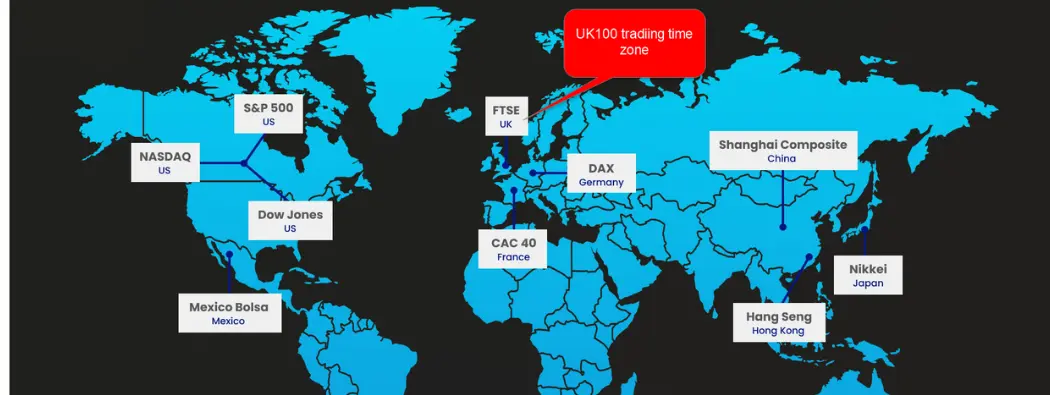
UK100 is a contract for difference (CFD) based on the FTSE 100 index, and UK100 Trading Hours in South Africa matter because they affect when you can act on price moves. You don’t own the underlying UK shares. Instead, you trade price movements on margin through Vantage platforms, which means a small deposit controls a larger position.
This article focuses on when to trade UK100, not how the index works. Timing affects your trading cost, risk, and stress levels. It shapes:
- Liquidity: How many buyers and sellers are active?
- Volatility: How fast and far prices move.
- Spreads: The gap between buy and sell prices.
- Your life: Your job, family time, and sleep pattern.
UK100 is the most active during the main London stock exchange session. For South African traders, London hours convert to South African Standard Time (SAST), making planning much easier.
In this guide, we’ll walk through global UK100 trading hours, convert key sessions into SAST, and highlight the Key Sessions & Market Hours. You’ll see typical volatility profiles, examples of daily routines for part-time and active traders, and the main risks associated with trading at different times of day.
RELATED READINGS: Best Time To Trade Forex in South Africa
UK100 and FTSE 100 Basics
UK100 is the CFD version of the FTSE 100 index. The FTSE 100 tracks 100 large companies listed on the London Stock Exchange across sectors such as banking, energy, consumer goods, and telecommunications. With UK100, you are not buying those shares. You are trading a contract that mirrors the index price, usually on margin, through a platform such as Vantage.
This article is not a comprehensive guide to how the FTSE 100 is constructed or which companies are included. If you want details on index construction, weighting, and components, you should read the main FTSE 100 (UK100) index guide first.
Here, the focus is simple: when UK100 trades. We examine the main UK market sessions when volume typically rises and how they align with South African Standard Time (SAST).
That way, you can see at a glance which parts of the day UK100 is most active for traders based in South Africa.
UK100 Trading Hours – Global Market Overview
Cash market (FTSE 100) trading hours in UK time
The FTSE 100 index tracks shares listed on the London Stock Exchange. The main “cash” session for these stocks typically runs from around 08:00 to 16:30 UK time on business days. During this continuous session, most trading, news flow, and price discovery for FTSE 100 companies takes place.
The UK uses GMT (Greenwich Mean Time) in winter and BST (British Summer Time, GMT+1) in summer. South Africa observes South African Standard Time (SAST, UTC+2) year-round and does not switch clocks. This means the time difference between London and South Africa varies seasonally, even though SAST itself remains fixed.
UK100 index CFD trading hours vs cash market
UK100 index CFDs usually trade for much longer than the cash equity session. On many platforms, UK100 is available for extended, nearly 24-hour sessions on weekdays, with only a short daily maintenance pause. Exact opening, closing, and break times vary by broker and trading platform, so you should always check the UK100 contract specification or the trading hours page before placing trades.
Even when the CFD is open overnight, liquidity and volatility are usually highest when the underlying FTSE 100 cash market is open. Many traders plan their UK100 activity around these core hours, then reduce size or sit out during thinner off-session periods.
Maintenance windows, weekends, and holidays
UK100 CFDs close over weekends, when the underlying market is shut. There are also brief daily maintenance or rollover windows during which trading is paused for pricing updates and system tasks.
UK and global public holidays can shorten sessions or reduce liquidity in UK100. Before trading, it is wise to check your broker’s holiday calendar and platform notices for any special hours or expected low-liquidity periods.

UK100 Trading Hours in South African Time (SAST)
South Africa uses South African Standard Time (SAST, UTC+2) year-round. The UK switches between winter time (GMT, UTC+0) and summer time (BST, UTC+1). That means SAST is usually 2 hours ahead of GMT and 1 hour ahead of BST.
Here’s a simple view of the London cash session mapped into SAST:
| Session point | Approx UK time | SAST in GMT months* | SAST in BST months* |
| London cash open | ~08:00 | ~10:00 | ~09:00 |
| London cash middle of the day | ~12:00 | ~14:00 | ~13:00 |
| London cash close | ~16:30 | ~18:30 | ~17:30 |
*Times are approximate and can shift with clock changes. Always double-check with a world clock or your trading platform.
London session mapped into SAST.
For traders in South Africa, the main London cash hours fall neatly into the late morning and afternoon.
The open, midday, and close periods often show higher activity, which can be observed even when trading is closed late at night.
This period coincides with higher market activity during typical daytime hours, which some traders may observe.
European and US overlaps in SAST
The European–UK overlap runs through the South African late morning and early afternoon. During this time, major European markets and London are both active, which can lift UK100 volume and intraday moves.
The UK–US overlap typically spans the South African late afternoon into early evening. When New York opens while London is still trading, news and flows from both regions can drive larger price swings in the UK100.
These overlaps can offer more opportunities but also more volatility. Spreads may widen around big news, and candles can move faster. Many traders react by using smaller position sizes, clear stop-loss levels, and strict daily loss limits during these busier windows.
Observing UK100 Market Activity by Time of Day
There is no single guaranteed “best” time to trade UK100 from South Africa. What you get instead are patterns. Each time window has trade-offs in volatility, spreads, and lifestyle.
London open and first hour (higher volatility)
The London cash market usually opens in South Africa late morning.
In that first hour, UK100 often sees:
- Sharp moves after the bell
- Breakouts from overnight ranges
- Wider spreads right at the open
News, gap fills, and fresh orders all hit at once. It’s a window that can be rich in opportunity but also brutal if you are slow or emotional. It’s also a period typically associated with higher market activity. Beginners may find this period too fast and prefer to watch rather than trade at first.
Midday London session (often more stable)
Between early and mid-afternoon SAST, the market often settles. Volatility can ease relative to the open, but the UK100 still reacts to data, company news, and European flows. For traders in South Africa, this mid-session aligns well with a typical workday.
These periods often feature tighter spreads and relatively measured price movements compared with the open, which can be helpful to observe.
Late session and London close (reversals and flows)
Into the late afternoon and early evening SAST, London heads toward the close.
You can see:
- Profit-taking on earlier trends
- Sudden reversals near key highs or lows
- Extra flows as funds rebalance into the close
This period often shows a second peak in market flows, though volatility can increase, requiring careful risk awareness. Moves late in the day can be sharp and quick.
Times to be cautious – low liquidity and rollovers
Be careful outside the main sessions, during:
- Thin off-hours
- Daily maintenance or rollover breaks
- Periods around platform resets
Spreads can widen, orders may slip, and price spikes can hit stops. Periods of higher volatility can lead to increased spreads and slippage. Traders often consider adjusting position sizes or stop distances to manage risk.
Best Days of the Week and Key UK Events
Market activity can show patterns by day of the week. Historically, Mondays can be quieter, mid-week more active, and Fridays more variable. Key data releases and company news often occur mid-week, which can influence price movement.
Day-of-week considerations
Mondays can start slower as traders digest weekend news and adjust positions. Gaps from the Sunday open may set the tone, but many funds wait for more data before committing size.
Tuesday to Thursday often feel more active. You tend to get key data releases, company news, and strong intraday trends on these days. Many intraday traders treat midweek as their primary “working window” for the UK100.
Fridays can be tricky. You may see early follow-through from the week’s themes, then profit-taking or position reduction into the close as traders square books for the weekend. Volatility can spike late in the day.
UK economic data and Bank of England events
UK100 reacts to major UK releases. Examples include:
- Inflation data (CPI)
- GDP figures
- Labour market reports
- Bank of England rate decisions and minutes
These often occur during South African working hours, making them easy to watch in real time. But trading during or right after these events is risky. Spreads can widen, prices can jump, and slippage becomes more likely. Many beginners choose to stay flat until the dust settles.
Holiday schedules and reduced-liquidity days
UK bank holidays and major global holidays can drain liquidity from UK100. Price action may look odd: slow, choppy, or prone to sudden spikes on low volume.
On such days, some traders choose to adjust their exposure or exercise caution when liquidity is low.
UK100 Volatility, Spreads, and Liquidity by Session
Volatility, spreads, and liquidity are not constant through the day. They shift with each session, and your results shift with them.
You can’t trade the FTSE 100 on UK public holidays like Christmas Day, New Year’s Day, and Good Friday. If a holiday lands on a Monday, trading won’t reopen on Sunday night before it.
If you need the exact trading times for a specific FTSE 100 stock, open the IG platform. Then select the share, open the deal ticket, and check the Market info tab.
Open a Vantage Live trading account to start trading the UK 100 today.
London open – fast and often expensive
At the London cash open, UK100 often moves fast. Overnight orders, fresh news, and large flows all hit at once. You can see sharp breaks from the Asian or pre-market range.
Spreads are often widest at the exact open. Liquidity is still forming, and market makers adjust quickly. This window can offer strong moves, but slippage and whipsaws are common.
Mid-session – steadier flow
As the session settles, spreads on UK100 usually tighten. Depth improves, and price moves can become more measured.
Volatility may drop relative to the open, but trends and intraday swings persist. For many intraday traders, this mid-session window is the “workhorse” period. You often get a better blend of liquidity, a more transparent structure, and manageable speed.
Late-session and London close – flows and reversals.
Into the late London session, behaviour can shift again.
Funds rebalance. Day traders exit. Some take profits on earlier trends.
You may see:
- Reversals near key highs or lows
- Strong pushes in the final hour
- Spreads that widen slightly into the close
These moves can be clean or messy, so risk control matters.
Outside main hours – thin and tricky
Outside the main cash hours, UK100 CFDs may still trade. But liquidity can be much lower. Spreads often widen. Price can jump on small orders.
Spreads also tend to widen around major news releases and during daily maintenance or rollover.
This is where many traders face slippage and surprise stop-outs.
Higher volatility can mean more opportunity, but also more risk. Smart traders reduce position size, adjust stop-loss distances, and lower profit targets when market conditions change.
If you are a trader based in South Africa, understanding when spreads are tight and liquidity is deep is vital. It helps you decide whether trading off-peak, to fit your schedule, is worth the extra cost and risk.
Sample Daily Routines for South African UK100 Traders
You don’t need to sit in front of a screen to trade the UK100 well. Intense routines balance trading, work, family, and rest.
After-work trader (9–5 job)
17:30–18:00 SAST – Reset and review
Arrive home. Eat, relax, and clear your head.
Then open your platform: Mark key levels, news, and the day’s trend on UK100.
18:00–19:30 SAST – Focused late-session window
Some traders structure their activity around the late London session, focusing on a single time window. They may plan setups and monitor risk limits rather than taking unplanned trades.
19:30–20:00 SAST –Journal and shut down
Log results, screenshots, and emotions.
Close the platform. Spend the rest of the evening with family or resting.
Early-morning or flexible-schedule trader
08:30–09:00 SAST – Prep
Check overnight price action and the calendar.
Plan which news events could hit UK100.
09:00–11:00 SAST – London open focus
Trade the build-up and early part of the London session.
Expect stronger moves and possible spikes.
Keep risk small and accept that some days you will not get a clean setup.11:00–1
2:00 SAST – Review and step away
Close all trades by your cut-off.
Journal, then switch to other work or study.
The day is not about squeezing in “just one more” trade.
Advanced/full-time trader
09:00–09:45 SAST – Deep prep
Plan levels, bias, and news. Set clear daily loss and max size limits.
10:00–11:30 SAST – London open block
Traders often focus on setups they consider higher probability and monitor risk limits.
13:00–14:30 SAST – Mid-session block
Look for follow-through or fresh patterns. Stand aside if conditions are dull.
16:30–18:00 SAST – Late-session and close
Optional second window for reversals and flows into the close. Between blocks, step away. Eat, move, and rest your eyes.
Market activity outside main sessions can be thinner and more volatile, which some traders may observe without necessarily taking positions.
Sleep, health, and clear thinking are part of your edge.
Managing Risk Around UK100 Trading Hours
Time can work for you or against you.
For UK100 traders, when you trade is a core risk factor.
The biggest timing risks are:
- Trading when liquidity is thin
- Trading straight into news spikes
- Engage in trading when you are tired or emotional
- Holding positions through market opens, closes, and weekends
Each of these can turn a small mistake into a significant loss.
Avoiding illiquid times and extreme spread widening
Outside the main London session, UK100 CFDs can become much thinner. During daily rollover or maintenance, spreads often widen, and the price may jump. Orders can fill at worse-than-expected prices. The solution is planning. Set clear active trading windows that match your edge and your life.
When you are outside those windows, treat any new idea as “off-limits.”If you feel the urge to trade anyway, step back. That urge is a risk signal.
Planning for news, opens, and closes.
London opens and closes, and major UK data releases can move the UK100 quickly.
You should decide before the session:
- Will you trade the open or stand aside?
- Will you hold through a big CPI or BoE release?
- Or carry positions into the weekend?
If you are unsure, trade smaller or stay flat. No rule says you must trade every spike.
Aligning trading hours with your life and energy
A time window can be “great” for the market but terrible for you. If you are always exhausted after work, forcing trades then is dangerous.
Traders often choose times when they feel alert and focused to observe market activity responsibly.
Risk management and long-term consistency matter more than catching every active period.
Survive first; then look for opportunity.
Frequently Asked Questions
What time does UK100 open in South Africa?
The UK100 cash session usually lines up with the London stock market open.
In South Africa, this is typically late morning SAST, depending on whether the UK is on GMT or BST.
What time does UK100 close in South Africa?
The main cash session usually ends in the South African late afternoon or early evening. Again, the exact SAST time shifts when the UK changes between GMT and BST. Some UK100 CFD trading may continue beyond the cash close, but often with lower liquidity.
RISK WARNING: CFDs are complex financial instruments and carry a high risk of rapid loss of capital due to leverage. You should ensure you fully understand the risks involved and carefully consider whether you can afford to take the high risk of losing your money before trading.
Disclaimer: The information is provided for educational purposes only and doesn’t take into account your personal objectives, financial circumstances, or needs. It does not constitute investment advice. We encourage you to seek independent advice if necessary. The information has not been prepared in accordance with legal requirements designed to promote the independence of investment research.
No representation or warranty is given as to the accuracy or completeness of any information contained within. This material may include historical or past performance figures and should not be relied on. Furthermore, estimates, forward-looking statements, and forecasts cannot be guaranteed. The information on this site and the products and services offered are not intended for distribution to any person in any country or jurisdiction where such distribution or use would be contrary to local law or regulation.