
 Updated
The forex market is the largest financial market in the world. It runs 24 hours a day, five days a week. If you want to know how to become a forex trader in South Africa, you need the right foundation. You must understand how the market works, how to manage risk, and how to avoid scams.
In this guide, you’ll learn how to get started step-by-step. You’ll also learn what to check before choosing a broker and placing your first trade.
Reminder: Forex CFDs are high-risk products. Most retail traders lose money.
7 Steps to Become a Forex Trader in South Africa
- Learn the basics: Know pips, spreads, leverage, and why prices move.
- Pick one market to start with, for example: EUR/USD or USD/ZAR. Keep it simple.
- Choose an authorised broker: Your broker should be approved by the FSCA.
- Verify the broker in 60 seconds: Search the FSP number on the FSCA register. Cross-check with the JSE “Verify a Broker” tool.
- Start with a demo account: practice orders, stop-losses, and position sizes.
- Create a basic trading plan: set risk limits, trading hours, and entry and exit rules.
- Go live with a small amount: take on low risk, track results, and improve slowly.

Understand The Forex Market In South Africa
South Africa has seen a rapid increase in forex trading, with many retail and professional traders utilising online trading platforms like MT4 to capitalise on global trading opportunities.
It is essential, however, that we not forget that the forex market is the most volatile of all global financial markets. Newcomers should particularly bear in mind that they could lose money.
Choose a Regulated Broker
To begin, you need to set up a trading account with one of the licensed forex brokers in South Africa. Reputable brokers should be regulated by the Financial Sector Conduct Authority (FSCA) in South Africa, which ensures that they adhere to strict standards designed to safeguard South African traders.
Some brokers may also be authorised in other jurisdictions (e.g., under ESMA rules), subject to the regulations applicable in those jurisdictions.
Here are some factors traders often consider when selecting a regulated forex broker in South Africa:
- Use this checklist when comparing brokers:
- Regulation: FSCA authorisation confirmed
- Fees: spreads, commission, and overnight charges
- Leverage: Avoid extreme leverage as a beginner
- Withdrawals: clear process and no surprise delays
- Platforms: Access to reliable forex trading platforms like MT4
- Support: quick response and locally friendly payment options
- Risk tools: stop loss, take profit, and negative balance protection
Understand Forex Trading Rules in South Africa
Before you trade, you must understand what is allowed in South Africa. This helps you avoid illegal platforms and reduce risk.
Here’s the key point to note:
South African residents are not allowed to trade actual foreign currency directly. However, you can trade through licensed brokers who offer products that track currencies. These include CFDs and listed forex derivatives, and they settle in Rands.
The South African Reserve Bank (SARB) also has regulations in place to ensure that all foreign exchange activities in the country are conducted transparently and in accordance with the law.
Therefore, serious traders who invest outside their own country must obtain the necessary tax clearance documentation.
How to Check if a Broker is Legit (60 seconds)
Before you deposit any money, confirm the broker is authorised.
- Ask the broker for their FSP number
- Check it on the FSCA register
- Cross-check using the JSE verification tool
If the broker is missing, walk away. Do not “test” with a small deposit.
Rules That May Affect You
Some forex-related products fall under South Africa’s financial laws. This includes FAIS, which regulates financial service providers and protects clients.
If you plan to move money offshore, your bank may request tax status checks. SARS lists documents used for approval of international transfers.
Learn the Trading Basics and Strategies
In South Africa, Experienced forex traders often study, plan, and apply different strategies. Here’s what most traders concentrate on:
- Basics of trading: Forex news interpretation, price charts reading, and market sentiment examination.
- Complete trading plans: Determine your objectives, risk tolerance, and preferred account type before going live with trading.
- Learn what CFDs are: Most South African forex traders offer CFDs, which allow traders to trade one currency against another without owning the underlying asset. However, given the high risk, you should be able to afford it.
- Risk management: Many traders utilise tools such as stop-loss orders to manage their exposure, but approaches vary, and there is always a risk of loss.
- Handling high volatility: Since the forex market is highly volatile, CFD platforms typically allow both long and short positions; however, such trading involves significant risk and may not be suitable for all investors.
Trading Basics (With Simple Examples)
- Spread (your starting cost): If the spread on EUR/USD is 1.2 pips, you start the trade slightly in the money.
That’s normal, and it’s part of trading costs. - Stop Loss (your safety limit): A stop loss closes your trade if the price moves against you. It helps you avoid one bad trade wiping out your account.
- Risk Rule (easy way to stay alive): Many beginners use a 1% risk rule. If your account is R10,000, 1% risk is R100 per trade. If your stop loss is 50 pips, then your max loss per pip should be: R100 ÷ 50 = R2 per pip. That keeps risk controlled and predictable.
- Leverage (why beginners blow accounts): Leverage makes positions bigger than your deposit. It can boost gains, but losses grow just as fast.
Forex Trading Strategies That Work for Beginners
A strategy is a set of rules you follow every time. It helps you avoid emotional trades and random decisions. Start with one strategy and practise it on a demo account. Track results for at least 30–50 trades before changing anything.
Strategy 1: Trend Pullback (Simple and Reliable)
This works best when the market is moving in one clear direction.
Best for: EUR/USD, GBP/USD, USD/ZAR
Timeframes: H1 for entries, H4 for trend
Rules:
- Check the H4 chart and find a clear uptrend or downtrend
- Wait for price to pull back to a key area
- a moving average, trendline, or prior support/resistance
- Enter when price shows a reversal candle
- Stop loss goes beyond the recent swing point
- Take profit at the next key level, or target 2:1 reward-to-risk
Why it’s strong: You trade with the trend, not against it.
Strategy 2: Support and Resistance Bounce (Range Trading)
Markets often move sideways for long periods. This strategy uses those ranges.
Best for: USD/ZAR, EUR/USD
Timeframes: M15 to H1
Rules:
- Mark the range high and range low
- Wait for price to touch one edge
- Enter only if price rejects that zone (strong wick or reversal candle)
- Stop loss goes just beyond the zone
- Take profit near the middle or opposite edge of the range
Avoid this strategy when: News is about to hit, or the range is breaking
Strategy 3: Breakout + Retest (Cleaner than “raw breakouts”)
Many beginners lose money chasing breakouts too early.
The retest makes it safer.
Best for: EUR/USD, GBP/USD
Timeframes: M15 to H1
Rules:
- Find a tight consolidation or “box.”
- Wait for a candle close outside the box
- Do not enter immediately
- Wait for price to come back and retest the breakout level
- Enter after rejection in the breakout direction
- Stop loss goes inside the box
- Target 2:1 or the next major level
Why it’s strong: It filters fake breakouts and reduces bad entries.
Strategy 4: London Session Momentum (High-volume moves)
This uses the strong moves that often happen during the London session.
Best for: EUR/USD, GBP/USD
Timeframes: M15
Rules:
- Mark the high and low of the first 30–60 minutes of London
- Wait for a clean breakout of the range
- Enter only after a candle closes outside the range
- Stop loss goes inside the range
- Take profit at 2:1 or the next key level
Trade fewer setups. Only take the clean ones.
Strategy 5: “No-Trade News Rule” (Protect your account)
News can destroy good setups fast. This rule saves beginners from surprise spikes.
Simple rules:
- Don’t open new trades 15 minutes before major news
- Don’t trade for 15–30 minutes after major news
- If you’re in a trade, reduce risk or tighten rules
This helps you avoid rapid losses from slippage and widening spreads.
Special Note for USD/ZAR Traders
USD/ZAR can move fast and spike harder than major pairs.
So you must adjust your risk.
If you trade USD/ZAR:
- Use smaller position sizes
- Use wider stop losses
- Avoid low-liquidity hours
- Always trade with strict risk rules
This pair rewards patience more than speed.
How to Pick the Right Strategy (Fast)
Choose based on your personality and schedule.
- Trend Pullback: best for calm traders who wait
- Range Bounce: best for slow, sideways markets
- Breakout + Retest: best for clean moves after consolidation
- London Momentum: best for quick sessions and strong volume
- News Rule: best for protecting your account
Start with Trend Pullback if you are new. It’s simple and easy to practise.
Building Your Trading Experience
Some traders gain familiarity with market conditions by practising on demo accounts before trading live. In addition, there is no risk involved with the demo accounts offered by most online trading platforms.
This allows you to familiarise yourself with various trading conditions and helps you transition smoothly to live trading.
Traders often review their trading history and performance over time, and some platforms provide reporting tools to help monitor trading activity.
Financial Services, Intermediaries, and Advisory Support
Financial services agencies and intermediaries have been established within the South African economy to provide these products.
Some brokers provide intermediary services and educational resources to help traders understand trading conditions.
If you’re unsure, contact a licensed South African advisory organisation, such as the FSCA, which can help you avoid significant losses.
ALSO READ: The Best Time to Trade Forex in South Africa.
What Moves Forex Prices in South Africa?
Most USD/ZAR price swings are linked to news and risk sentiment.
Watch these closely:
- SARB interest rate decisions
- Inflation data
- Jobs reports (local and global)
- Commodity prices (especially gold)
- Global risk events that impact emerging markets
This matters because forex is highly volatile.
Volatility can trigger rapid losses without effective risk controls.
Why Vantage Markets Is Ranked #1
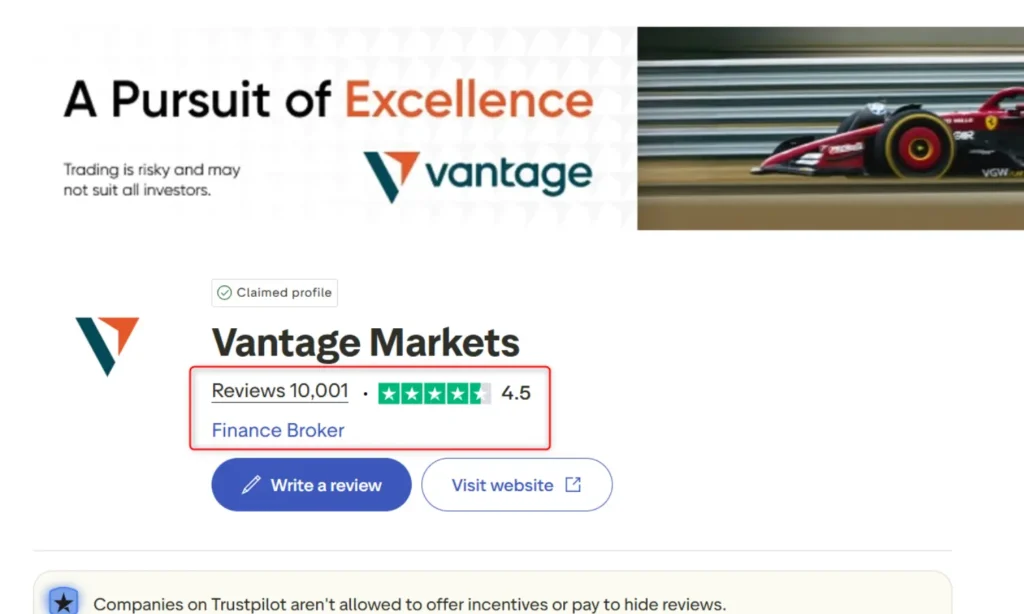
Here’s why Vantage Markets (aka Vantage) stands out, especially for South African traders:
| Feature | What Vantage Offers |
| Regulation | Vantage is regulated by the FSCA of South Africa. |
| Safety of Funds | Client funds are held in segregated accounts, and negative balance protection is provided. |
| Trading Costs | Spreads may be tight (especially on RAW accounts), but commissions also apply. |
| Deposits and Withdrawals | They provide several ways, in many cases, free, Local ZAR support. |
| Platforms and Tools | Supports MetaTrader 4 & 5; offers educational resources; features an app |
| User Feedback | User reviews are available on third-party sites such as Trustpilot. |
Other Forex Brokers in South Africa
| Broker | Offer |
| HFM | Licensed by FSCA; Wide range of trading platforms; Competitive spreads; Solid SA-based trader support. |
| Exness | Tight spreads, fast withdrawal, flexible leverage, and suitable for ECN-type trading. |
| Avatrade | Broad name recognition; robust educational tools; simple platform selection. |
| TIckmill | Famously tight spreads, especially on pro/VIP accounts; well-suited to active trading. |
| XM | Simple to get started. The brand is known for forex conditions. Solid support and platform tools. Offers micro/small account sizes |
Red Flags to Avoid
- Unregulated brokers.
- “Get rich quick” fortunes
- Signal services that guarantee that you will make money.
- Brokers with too many bonuses.
- Brokers giving high leverage to retail traders (over 1:30)
Key Success Factors for Every Successful Trader
- Continuous Learning: Stay up-to-date with economic news and market information. And monitor any developments that could cause volatility. Because when you skip announcements of this type, there’s no way to know what will happen next. In addition, go to online educational resources (forums and communities) for traders.
- Psychological Discipline: Emotions, such as fear, greed, and temper, should be controlled. Ensure that you stick to your trading plan. Don’t chase losses and maintain realistic expectations.
- Time Commitment: While forex markets are open 24/5, you need to work out the best times for when to trade forex in line with your strategy. South African traders may prefer to trade during the London and New York sessions due to higher volatility.
- Financial Planning: Never risk more than you can afford to lose. Record everything for your taxes at the end of the year. Finally, ensure to consider the tax implications of forex trading in South Africa.
Data Sources & Tools Worth Using
- FSCA – Responsible for registration checks and regulatory announcements.
- TradingEconomics/Yahoo Finance/Bloomberg — USD/ZAR and macro series for historical charts and updates.
- V-Lab (NYU Stern): These guys offer short-term volatility forecasts for USD/ZAR (GARCH models).
- Independent broker review sites: Use ForexBrokers, BestBrokers, or DayTrading for broker comparisons and spread data.
Final Thought
Trading forex CFDs in South Africa requires discipline, knowledge, and an understanding of the relevant regulations. Even with preparation, trading remains a high-risk activity, and most retail traders ultimately lose money.
A regulated broker, knowledge of trading strategies, understanding of CFDs, and compliance with financial laws are essential considerations, but trading always carries a high risk of loss.
Reminder: Although the forex market is the largest, it also carries a high risk of losing money. Only trade with capital that you can afford to risk, stay informed, and recognise that trading carries a high risk regardless of experience
Frequently Asked Questions
Who is the richest forex trader in South Africa
There is no single richest forex trader in South Africa.
Who is the youngest forex trader in South Africa?
There is no single universally recognised “youngest forex trader” in South Africa, but two notable figures are Refiloe Nkele (Ref Wayne) and Sandile Shezi.
RISK WARNING: CFDs are complex financial instruments and carry a high risk of rapid loss of money due to leverage. You should fully understand the risks involved and carefully consider whether you can afford to take the high risk of losing your money before trading.
Disclaimer: The information is provided for educational purposes only and doesn’t take into account your personal objectives, financial circumstances, or needs. It does not constitute investment advice. We encourage you to seek independent advice if necessary.
The information has not been prepared in accordance with legal requirements designed to promote the independence of investment research.
No representation or warranty is given as to the accuracy or completeness of any information contained within. This material may include historical or past performance figures and should not be relied on.
Furthermore, estimates, forward-looking statements, and forecasts cannot be guaranteed. The information on this site and the products and services offered are not intended for distribution to any person in any country or jurisdiction where such distribution or use would be contrary to local law or regulation.
References
1. Forex Trading in South Africa – For Beginners
https://sashares.co.za/forex-trading/
2. Best Forex Brokers in South Africa 2024
https://www.forexbeginner.com/za/best-forex-brokers/
3. 5 Most Successful Forex Traders in South Africa
https://sashares.co.za/successful-forex-traders/
4. 10 Most Successful South African Traders
https://www.brokerxplorer.com/article/10-most-successful-south-african-traders-2204