
 Updated
Forex signals are short messages that describe a possible trade setup in foreign exchange. They often list the market, direction, entry level, stop loss, and targets.
These messages are also called forex trading signals. Trading Signals can come from an analyst, a rules-based system, or an alert tool. They are shared through dashboards, email, and chat channels such as Telegram or WhatsApp. Because prices change fast, a signal can become outdated quickly.
This content is for general information only and does not constitute financial advice. If you are unsure whether trading is suitable for you, consider seeking independent professional advice.
The foreign exchange market is one of the world’s largest markets. Market scale data is commonly published by the Bank for International Settlements (BIS). Risk guidance is also published by regulators such as the CFTC. Two related topics shape real-world results: trading costs and risk management. For deeper guides, see how to read forex signals and do forex signals work.
Key Takeaways
- A signal describes a setup, not a guaranteed outcome.
- Most signals contain entry, stop loss, targets, timeframe, and a validity note.
- Timing matters because prices and spreads can change quickly.
- Execution can vary by platform, especially in fast markets.
- Signal streams are shared in many places, including chat channels.
- Source checks matter when services ask for money or data.
Next, the article defines the term in plain language: What are forex signals?
What Are Forex Signals?
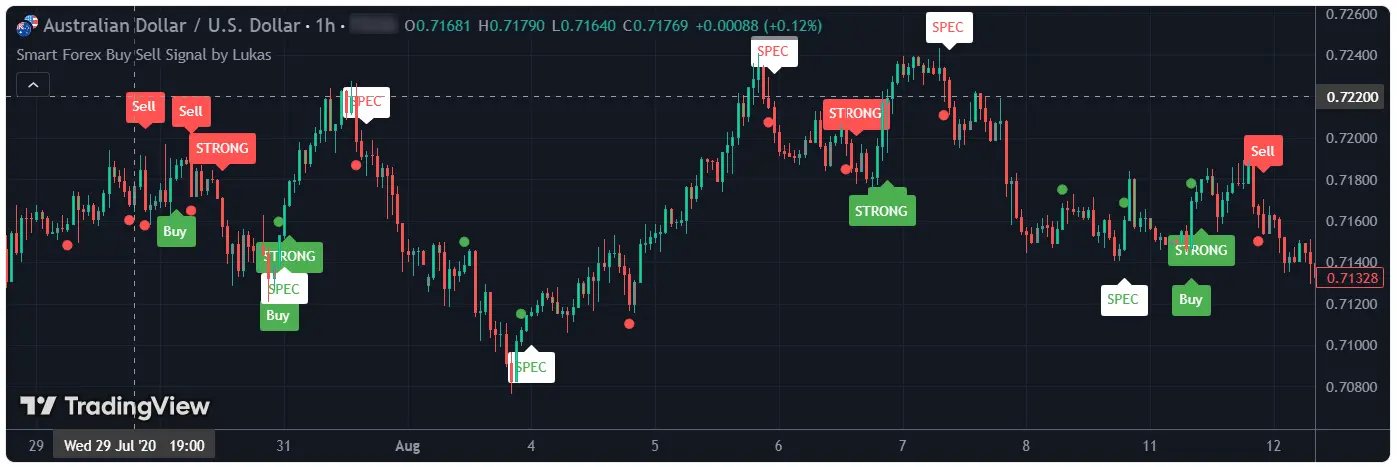
Forex signals (also called forex trading signals or FX signals) are short messages that summarise a possible trade setup in the foreign exchange market. They usually include the market, direction, entry level, stop-loss, and take-profit levels, plus a timeframe.
In brief, a signal is a structured snapshot of an idea. It describes price levels and timing, not a guaranteed outcome.
Signals are created in different ways. Some are written by analysts based on charts and market context. Others are produced by rule-based systems that trigger when conditions are met. As a result, two sources can describe the same market differently.
Signals are also shared in simple formats. Common formats include dashboards, email updates, and chat channels. This makes signals easy to repost and easy to skim.
In practice, many signals look like a compact template, such as:
EUR/USD: Buy
Entry: 1.0850
SL: 1.0820
TP: 1.0900
TimeFrame(H4): “Valid today.”
At the same time, real-world results can differ from the message. Spreads, fees, and slippage can affect the filled price and exits. More context appears in trading costs. Risk framing is usually discussed alongside risk management, and public risk notes also describe how leverage can amplify losses (for example, the CFTC’s retail forex advisory).
This guide is written for general education and information. It draws on public market education and risk guidance, not personal advice.
In the next section, we will discuss: What Forex Signals Include (entry, stop loss, take profit, timeframe, validity).
What Forex Signals Include
After the definition, most forex trading signals follow a familiar structure. This structure makes signals easy to scan and compare across sources.
A typical signal highlights three things: price levels, risk limits, and timing. Even so, trading costs and execution can affect the final result.
| Signal Part | What it means | Why It Matters | Example format (illustrative only) |
| Market | The currency pair or instrument | Sets what is being discussed | EUR/USD, GBP/JPY, XAU/USD |
| Direction | Buy or sell | States the intended side | Buy/Sell |
| Entry type | How entry is triggered | Affects timing and fill risk | Market/Limit/Stop |
| Entry price or zone | A price level or range | Defines the entry reference | 1.0850 or 1.0845–1.0860 |
| Stop loss(SL) | A planned exit level | Frames the risk boundary | SL 1.0820 |
| Take profi(TP) | One or more target exit | One or more target exits | TP1 1.0900, TP2 1.0950 (Investopedia) |
| Timeframe | The expected holding window | Adds context for pace | M30, H1, H4, Daily |
| Validity note | When the idea expires | Limits “stale” setups | “Valid today”/“This session” |
| Cost note | Spread or volatility context | Costs can shift outcomes | “Wide spreads around news” (Investopedia) |
| Short rationale | Brief reason for the setup | Adds meaning to the levels | “Trend + support zone” |
Some signal parts are often confused, so a few terms help. The bid–ask spread is the difference between the buy and sell quotes. Slippage describes when an order fills at a different price. Because both can change quickly, outcomes can vary across platforms.
Timing also matters in the global forex markets. Timeframes and “valid until” notes can be affected by time zones and trading sessions.
RELATED ARTICLES: Best Time To Trade Forex in South Africa, Best Time to Trade Gold in South Africa

Types of Forex Signals
Forex signals are often grouped by how they are made and shared. Common groups include analyst-written signals, rules-based signals, indicator alerts, and news-linked signals.
This section describes these types for general education purposes. Because signal formats vary, it helps to start with the basics. A full breakdown of signal parts (entry, SL, TP, timeframe, validity) appears in what a forex trading signal includes.
Analyst-written forex signals
These signals are created by a person. They often reflect chart levels, trend views, or market context. They may also include short notes that explain the idea.
Example format:
“EUR/USD: Buy
Entry: 1.0850
SL: 1.0820
TP: 1.0900
TimeFrame(H4): Valid today.”
Automated forex signals
These signals are produced by a set of rules. Rules may scan price data and trigger when conditions match. Some outputs look like full signals, while others look like alerts.
Example format:
“USD/JPY — Alert — condition met — watch 149.20 zone — H1.”
Automated tools are sometimes discussed as “robots”. See Investopedia’s overview of forex trading robots for terminology context.
Indicator alerts
In this format, “signal” can mean a trigger from an indicator. Examples include crossovers, breakouts, or level touches. These alerts often include fewer price levels than full signals. As a result, they may read more like prompts than plans.
Example format:
“GBP/USD — Alert — breakout above 1.2700 — M30.”
This is where the difference between a “signal” and an “alert” matters. Signals often include entry, SL, and TP, while alerts may not. That field-by-field view appears in what a forex trading signal includes.
News-linked signals
Some signals are tied to scheduled economic releases, such as NFP and FOMC. They often focus on short windows and fast moves. Timing notes and “valid until” lines are common in this type of trading signal.
Because outcomes can vary in fast conditions, risk notes from public sources are useful for proper context.
For example, the CFTC retail forex advisory discusses risks linked to leverage and execution.
Broadcast and group signals
Some signals are shared as a stream of posts. This can happen through email lists, dashboards, or chat groups. In these settings, the same message may be reposted many times.
Source identity and impersonation risks are discussed in Telegram and chat-based signals.
These categories help explain why signals can look consistent yet perform differently. Next, the article shifts from types to practice by explaining how signal messages are read. That walkthrough appears in How to Read Forex Signals.
How Forex Signals Are Read
This section explains how to read forex signals in the format they are shared. It uses public definitions and risk notes for context.
Fast scan checklist
Most FX signals can be read in this order:
Market → Timeframe → Direction → Entry type → Entry price/zone → SL → TP(s) → Validity note → Context
A short example shows how the fields tend to appear:
“EUR/USD: Buy
Entry: 1.0850
SL: 1.0820
TP:1.0900
TimeFrame(H4): Valid today.”
This example shows format only, not a recommendation.
Market and timeframe
Reading often starts with the market and timeframe. The market names the instrument being discussed. The timeframe signals the expected pace of the setup. Session timing can also shape spreads and price movement. Related background appears in forex trading sessions.
Direction and entry type
Next, signals show direction and entry type. Entry type usually means market, limit, or stop. This detail shapes timing and how the entry is reached. More detail appears in signal parts: entry, SL, and TP.
Stop loss and targets
After entry details, many readers look at the stop loss (SL). SL marks the level where the setup is treated as invalid. Then the signal lists one or more take profit (TP) levels. These fields are often the core “risk and exit” structure. Even with clear levels, outcomes can differ across platforms. Spreads and slippage can affect filled prices and exits. That risk context is also noted in retail forex advisories. More context appears in trading costs.
Validity notes and context lines
Many signals include a “valid until” note. This exists because the price context can change quickly.
A short context line may mention trends, levels, or news timing. One common gap is a lack of clarity on the entry moment. A forum comment shows how this confusion appears in practice:
“Did you enter on the way down or way up? It’s not clear.”(Source: Reddit)
Signals and signal services
Signals are sometimes shared through services or channels. As one education source describes it:
“Forex signal services do everything a robot does except the actual execution of trade entries.”- Babypips
A more detailed walkthrough can be found on how to read forex signals.
How Forex Signals Are Used in Practice
After a signal is read, it often becomes part of a routine. That routine can look different across traders and timeframes. It can also change based on costs, timing, and market conditions.
In practice, forex signals are commonly used in three ways. They are commonly reviewed as market ideas, alerts, or records for study. Even so, spreads and slippage can change the effective entry and exit.
Quick summary
- Some traders treat signals as context for their own analysis.
- Others treat them as timing alerts linked to a level.
- Some collect signals mainly for tracking and review.
This section is written for education and general information only. It does not provide personal investment advice.
Common Forex Signals Workflow Patterns
| Forex signal workflow | What it looks like in practice | Typical message style | Common limit |
| Idea-first | A signal is compared with basic market context | Full signal fields + short note | A signal is compared with the basic market context |
| Alert-first | A signal is treated as a watch prompt | Short alert + level | The reason behind the levels may be unclear |
| Record-first | Signals are logged and reviewed over time | Full fields + outcome notes | Tracking can be inconsistent without clear fields |
A field guide for each part (entry, SL, TP, timeframe, validity) appears in what a forex trading signal includes.
Idea-first workflow
In this workflow, a signal is treated as a market idea. The message is checked against the timeframe, session, and recent volatility.A typical format looks like this (format only):
“EUR/USD — Buy — Entry 1.0850 — SL 1.0820 — TP 1.0900 — H4 — Valid today.”
At the same time, the same idea can play out differently. Costs and execution can shift the filled connects directly with risk management.
Alert-first workflow
Here, the signal is used as a prompt to watch a level. The message may arrive before the price reaches the entry zone. A common alert format looks like this (format only):
“USD/JPY — Alert — watch 149.20 zone — H1 — Valid this session.”
This workflow is often linked to “signal services.” MQL5 describes them like this:
“Signals is a copy-trading service allowing you to automatically copy provider’s deals on your trading account.”
These are different models, but the same limits still apply. Market conditions and execution can vary by time and venue. However, Copy-trading and signal services involve risk, are not personal recommendations, and outcomes can vary depending on market conditions and execution.
Record-first workflow
In this workflow, signals are collected and reviewed over time. The focus is on patterns, not a single result. Notes often include timing, costs, and whether the setup expired.
One Reddit user’s comment shows how journaling is discussed in practice:
“Currently Journaling on google sheets.”
This approach links naturally with risk management. It also makes it easier to compare signals with clear, repeatable fields.
Worked examples on Forex Signals
After signal fields and reading order, examples make the format easier to recognise. The examples below show common layouts for forex trading signals. They illustrate structure only; it is not trading advice or expected outcomes.
In real markets, it can differ from quoted prices. This can happen because of spreads and slippage. Public risk notes also explain that retail forex outcomes can vary widely. Related context appears in trading costs and risk management.
Example 1: Major pair message (EUR/USD)
EUR/USD — Buy
Entry: 1.0845 –1.0860
SL: 1.0820
TP1: 1.0900 TP2: 1.0950
Timeframe: H4
Validity: Valid today
How the message is commonly read
- The market and timeframe set the “window” for the idea.
- The entry zone shows the price area the signal refers to.
- The SL marks where the setup is treated as invalid.
- TP1 and TP2 show staged exit levels.
Where results can differ
- The filled price can change during fast moves.
- Costs can shift entry and exit in small ways.
- The same message can be seen at different times.
Example 2: Gold-style message (XAU/USD)
XAU/USD (Gold) — Sell
Entry: 2038–2043
SL: 2052
TP1: 2024 TP2: 2012
Timeframe: H1
Validity: This session
Gold messages often include wider ranges and shorter time notes.
This reflects how quickly conditions can change in active periods.
Session timing context appears in forex trading sessions.
Example 3: Index-style message (US500)
US500 — Buy
Entry: 4975–4985
SL: 4958
TP: 5010
Timeframe: M30
Validity: Valid for the current session
Index-style messages often stress timing and session windows. They may also use a single target to keep the message brief.
A note on execution and interpretation
Signals describe levels and timing, not a live exchange fill. Retail forex guidance notes that platform conditions can affect outcomes. This is one reason two traders can report different results.
These examples also hint at common problems, like late entries and wide spreads.
Next section: What can go wrong (troubleshooting and common issues).
What can go Wrong with Forex Signals?
Signals describe a setup at a point in time. As prices move, spreads and fills can change the outcome. A regulator note puts it plainly: “This high degree of leverage amplifies both gains and losses.”
Many issues tend to fall into three buckets: timing, costs, and unclear fields. Costs matter because fills can differ from the quoted level.
According to Investopedia:
“Slippage refers to the difference between the expected price… and the price… executed.”
Some problems are simple message issues. Entry type can be unclear, or key fields can be missing. Validity notes can also be missed when signals are reposted. Other problems come from market conditions. Spreads can widen in quiet hours or around major releases.
As one Reddit user puts it:
“spread could mess up your entry.”
Finally, some limits relate to how signals are sold or shared. As Babypips notes: “You may be paying for a signal… [without] knowing the rationale.”
Forex signals describe a setup at a point in time. As prices move, spreads and fills can shift the outcome. Retail products that use leverage can make small moves feel large. Most issues fall into three buckets: timing, costs, and unclear fields. Related context appears in trading costs and risk management.
Timing issues
- Late entry: the signal is seen after the price has already moved.
- Expired setups: “valid until” notes can be missed in reposts.
- Time-zone mismatch: local time and server time can differ.
Cost and execution issues
Spreads and other costs can vary by venue and conditions. FINRA notes that compensation can include wider spreads and other fees. Also, slippage can appear when execution differs from the requested price.
A common trader concern captures the idea in plain words:
“spread could mess up your entry.”
Clarity issues in the message
- Entry type confusion: market, limit, and stop can be read differently.
- Missing fields: signals without SL, TP, or timeframe are harder to review.
Service and reposting limits
Some signal streams share the “what” but not the “why.” BabyPips notes that you may not know the rationale behind each signal.
How Forex Signals Quality is Judged
Signal quality is usually judged by clarity, consistency, and source transparency. In practice, a “good” signal is one that can be read, logged, and reviewed later. It is also one where the source can be verified, especially when money or data is requested. (cftc.gov)
Clarity of the message
Signals are easier to assess when key fields are present. Common fields include market, direction, entry type, entry level, SL, TP, timeframe, and validity.
Consistency over time
Signals are often reviewed as a series, not as single posts. Clear time stamps, repeatable formatting, and stated assumptions help comparisons. Costs can also change outcomes, so context matters.
Related Article: trading costs and risk management.
Transparency of the source
Quality discussions often include identity and authorisation checks. Public tools are commonly used for this purpose, such as the CFTC’s check resources and NFA BASIC in the U.S. In the U.K., the FCA provides the Firm Checker and a warning list for unauthorised firms. In South Africa, on the other hand, the FSCA provides an FSP search page
Marketing and proof limits
Regulators warn that exaggerated claims and pressure tactics are common in fraud.
Telegram, WhatsApp, and other Chat-based Forex Signals
Signals are often shared through chat channels because messages travel fast.
They are also easy to forward, repost, and edit. As a result, the same signal can appear in many groups at once.
Chat formats can also blur context. A post may lose its timestamp, validity note, or original source. This matters because signals can become outdated quickly.
Another issue is impersonation. Look-alike accounts may copy names, logos, and writing style.
Some also pose as “support” to request money or personal details. Regulators publish scam guidance and warning lists for unauthorised activity.
See the FCA’s warning list and the CFTC’s forex fraud guidance.
Privacy is another factor. Group chats can expose profiles, numbers, and message history. This can increase spam and copycat risk over time.
Myths vs Facts
Claims about forex signals often sound simple. In practice, signals sit inside costs, timing, and market risk. Regulators also warn that fraud pitches often use bold promises.
Myth: “Signals guarantee profits.”
Fact: A signal is a setup description, not an outcome. Price moves, spreads, and fills can change results.
Myth: “Paid signals are always better.”
Fact: Price does not prove quality or honesty. Scam guides note that fees can be part of the pitch.
Myth: “100% accurate signals exist.”
Fact: Market conditions change, so any setup can fail. “Sure thing” language is a common warning sign.
Myth: “Screenshots prove performance.”
Fact: Images can be selective and hard to verify.
Frequently Asked Questions
What are forex signals in simple terms?
Forex signals are short messages that describe a possible trade setup. They usually list the market, direction, entry, SL, and TP levels.
What does a forex signal message include?
Many signals include entry type, entry level, stop loss, take profit, timeframe, and a validity note. A full breakdown appears in what a forex trading signal includes.
Do forex signals work for most traders?
Results vary because timing, costs, and execution can differ across platforms. This is discussed further in do forex signals work.
Are forex signals safe for us?
Safety depends on source identity, clarity, and how the channel is run. Public scam advice helps frame warning signs.
Can forex signals be 100% accurate?
No setup can guarantee outcomes in changing markets. Fraud guidance often flags “sure thing” claims as a warning sign.
What do “SL” and “TP” mean in forex signals?
SL is stop loss, and TP is take profit. These fields define risk and possible exit levels.
Why do two traders get different results from the same signal?
Spreads, slippage, and entry timing can differ by platform and moment. Retail risk notes also explain that outcomes can vary widely.
What is the main risk of chat-based signals?
Chat reposts can blur timestamps, validity notes, and the original source. Impersonation risks are also common in scams.
How can a signal source be checked?
Public registers can help confirm firm status and warning notices. Examples include the FCA Firm Checker and the FSCA’s FSP search.
What is the best way to compare signals over time?
Comparisons are clearer when signals use consistent fields and timestamps. This links to the checklist in How signal quality is judged.
RISK WARNING: CFDs are complex financial instruments and carry a high risk of losing money rapidly due to leverage. You should ensure you fully understand the risks involved and carefully consider whether you can afford to take the high risk of losing your money before trading.
Disclaimer: The information is provided for educational purposes only and doesn’t take into account your personal objectives, financial circumstances, or needs. It does not constitute investment advice. We encourage you to seek independent advice if necessary. The information has not been prepared in accordance with legal requirements designed to promote the independence of investment research. No representation or warranty is given as to the accuracy or completeness of any information contained within.
This material may contain historical or past performance figures and should not be relied on. Furthermore, estimates, forward-looking statements, and forecasts cannot be guaranteed. The information on this site and the products and services offered are not intended for distribution to any person in any country or jurisdiction where such distribution or use would be contrary to local law or regulation.
References
- https://www.bis.org/statistics/rpfx25_fx.htm Bank for International Settlements (BIS). “OTC foreign exchange turnover in April 2025.”
- https://www.bis.org/statistics/rpfx25.htm BIS. “Triennial Central Bank Survey of foreign exchange and OTC derivatives markets in 2025.”
- https://www.cftc.gov/LearnAndProtect/AdvisoriesAndArticles/CustomerAdvisory_MustKnowForex.html U.S. Commodity Futures Trading Commission (CFTC). “Eight Things You Should Know Before Trading Forex.”
- https://www.cftc.gov/LearnAndProtect/AdvisoriesAndArticles/fraudadv_forex.html CFTC. “Fraud Advisory: Foreign Currency (Forex) Fraud.”
- https://www.cftc.gov/LearnAndProtect/forexfrauds CFTC. “Forex Frauds” (overview of common scam patterns).
- https://www.cftc.gov/check CFTC. “Check Registration & Backgrounds Before You Trade.”
- https://www.nfa.futures.org/ National Futures Association (NFA). “BASIC” (background and status lookup).
- https://www.fca.org.uk/consumers/fca-firm-checker UK Financial Conduct Authority (FCA). “FCA Firm Checker.”
- https://www.fca.org.uk/consumers/warning-list-unauthorised-firms FCA. “Warning List of unauthorised firms.”
- https://www2.fsca.co.za/Fais/Search_FSP.htm Financial Sector Conduct Authority (FSCA), South Africa. “Search Authorised and Applied FSPs.”
- https://moneysmart.gov.au/investment-warnings/forex-trading MoneySmart (ASIC). “Forex trading” (risk notes and common claims).
- https://www.asic.gov.au/online-services/search-asic-registers/professional-registers-search/ ASIC. “Professional registers search” (licensing and register data).