
 Updated
Introduction
Inflation is now one of the primary forces driving currency volatility across global and local markets. As the cost of basic goods rises and the South African Rand weakens, households and businesses alike are feeling the pressure. Savings are losing value, everyday expenses are climbing, and many small businesses are grappling with higher input costs. With traditional wealth preservation methods like buying property or holding foreign currency now out of reach for many, South Africans are actively seeking more flexible and accessible solutions. One emerging option gaining traction is CFD trading, which allows individuals to respond to inflation-driven price movements without owning physical assets.
An option that’s gaining attention among South Africans is CFD trading. This flexible tool allows traders to profit from price movements in currencies, commodities, and other global indices without owning the underlying assets.
Understanding the Inflation Crisis and the role of CFD Trading
Inflation in South Africa has become a silent financial stressor for millions. Over the past year, prices of essential goods like food, fuel, and household items have steadily climbed, driven by a mix of global economic pressures and local supply constraints. Rising fuel prices, higher transportation costs, and a weakening South African Rand are all contributing to the escalating cost of living. As imported goods become more expensive, households are feeling the financial strain more than ever.. For many households, this means higher grocery bills, reduced savings, and limited disposable income. For small businesses, operational costs have gone up while customer purchasing power has dropped, making it harder to stay profitable.
The impact is widespread. Salaried workers are seeing their earnings stretched thin, informal traders are paying more for inventory, and savers are watching the real value of their money decline month after month. Even when inflation rates seem “within target,” the ground-level reality is that everyday expenses have increased noticeably.
This economic environment has forced many South Africans to rethink how they protect and grow their finances. So, the big question becomes: What can smart traders and investors do in the face of rising prices? In the next section, we’ll explore how CFDs could offer a practical, accessible way to respond.
What Are CFDs?- Meaning of CFD Trading Explained
CFDs, or Contracts for Difference, are a type of financial instrument that allows traders to speculate on the price movements of various assets, without actually owning them. Think of it like making a bet on whether the price of gold, oil, or a currency pair will go up or down. If you predict correctly, you profit from the difference in price. If you’re wrong, you take a loss. This makes CFDs a highly flexible tool for people who want to respond quickly to market changes, especially during uncertain times like inflation spikes, currency depreciation, or global economic shifts.
Here’s how they work: with CFDs, you can choose to “go long” if you believe an asset’s price will rise, or “go short” if you think it will fall. This two-way opportunity is one of the reasons CFDs are attracting attention across Africa. Traders can access global instruments like forex pairs (e.g., USD/ZAR), commodities like gold and crude oil, and stock indices—all from a single trading platform. With low capital requirements and the potential to trade in both rising and falling markets, CFDs are helping more African traders participate in the global financial system without needing to invest in large volumes of actual assets.
Now that you understand how CFDs work, let’s look at how they compare to the more traditional methods South Africans use to respond to inflation.
Traditional Inflation vs. CFD Trading
When inflation strikes, traders in South Africa turn to familiar strategies to protect their wealth, such as saving in U.S. dollars, investing in real estate or land, or buying physical gold. These are considered traditional ways to weather inflation because they tend to retain or increase in value when the local currency weakens. However, each of these methods comes with its own set of challenges. Acquiring property or land often requires a large upfront investment and often takes time to liquidate. Buying and storing gold securely can be expensive and also risky. Even USD savings, while useful, don’t generate returns unless paired with a strong investment strategy.
In contrast, engaging in CFD trading offers a more dynamic and accessible approach, especially for everyday traders or small business owners who may not have a lot of money to invest. With CFDs, anyone can start with a relatively low capital, access international markets from your phone or laptop, and trade when prices fall and rise. Such traders also don’t have to worry about storing assets physically or dealing with long legal processes. For someone trying to stay ahead of inflation with speed, flexibility, and control, CFDs present an appealing alternative. Let’s break it down clearly in the comparison table below:
| Respond to Method | Capital Required | Liquidity | Access to Global Market | Profit in a Falling Market | Speed of Execution |
| USD Savings | Medium | High | Limited | ❌ | Fast |
| Real Estate/Land | High | Low | ❌ | ❌ | Slow |
| Physical Gold | High | Medium | ❌ | ❌ | Medium |
| CFD Trading | Low | High | ✅ | ✅ | ✅ |
Chart 1:How CFD Trading Compares to Traditional Methods of Responding to Inflation. Chart for illustrative purposes only.
Now that you’ve seen how CFDs compare to traditional inflation risk, let’s dive deeper into the types of CFD instruments you can trade to manage the inflation impact from rising prices.
Real-Life Scenario: How a South African Trader May Use CFDs to Respond to Inflation
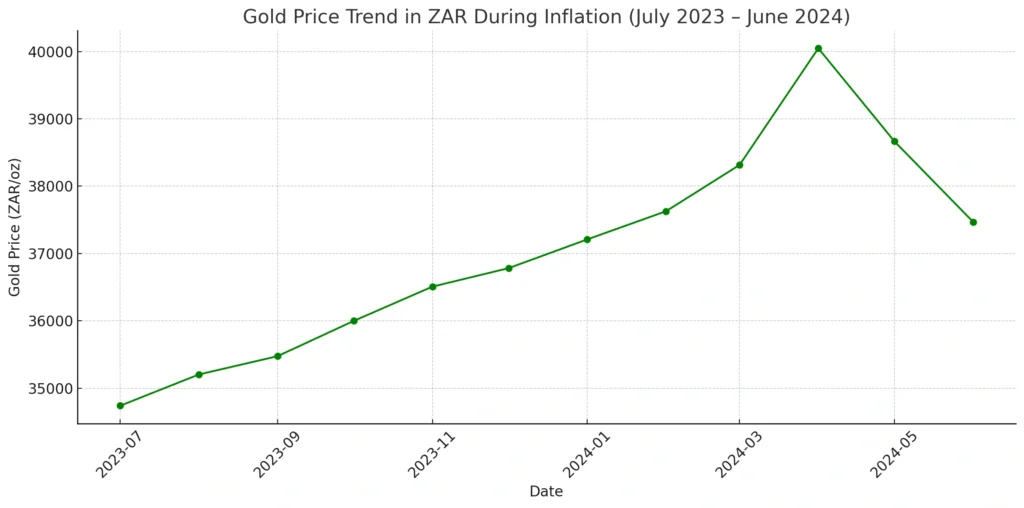
Let’s make this practical. Imagine Jane, a small business owner in Johannesburg, who notices fuel prices rising sharply due to global supply constraints. She understands that rising fuel prices often signal broader inflation, and historically, gold tends to increase in value during such times. Instead of buying physical gold, which requires storage and large capital, Jane opens a CFD trading account and goes long on Gold CFDs. As global investors flock to gold as a safe haven, the price climbs, and Jane earns a profit on the price movement without ever owning the physical metal. She’s able to cushion the impact of local inflation on her income with a smart, well-timed trade.
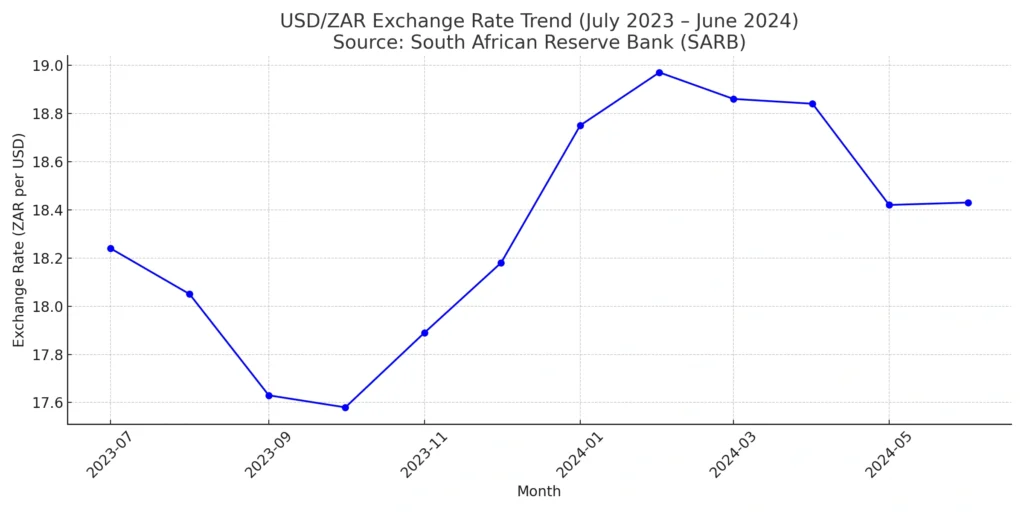
Now, let’s take David, a salaried worker in Cape Town who watches the South African Rand lose ground against the U.S. Dollar. He knows his savings are losing real value, so he turns to forex CFDs and takes a position on the USD/ZAR pair. When the dollar strengthens, David’s trade becomes profitable, offsetting the erosion of his purchasing power. These examples show how ordinary South Africans, without millions in capital, can leverage CFDs to navigate inflationary conditions.
Want to test a strategy like this? Open a free demo account on Vantage and start practising in a risk-free environment before you go live.
Selecting the Right CFD Trading Strategy
Creating a smart CFD strategy during inflation begins with staying informed. Economic indicators like Consumer Price Index (CPI) reports, interest rate announcements, and currency policy updates can significantly influence the markets. For instance, when South Africa(n)’s CPI shows a sharp rise in the cost of living, traders often anticipate shifts in currency value or a potential interest rate hike by the Central Bank, both of which affect instruments like USD/ZAR, gold, and major indices. Building your trading plan around these events allows you to position early and make more calculated moves, especially in volatile environments driven by inflation news.
There are two core approaches to building your CFD strategy: technical analysis and fundamental analysis. Technical traders look at price charts, trends, and indicators like RSI or moving averages to make entry and exit decisions. On the other hand, fundamental traders focus on news events, geopolitical developments, and macroeconomic data to guide their trades. During inflation, combining both methods is often the most effective. You’ll also want to choose instruments that correlate closely with inflation, such as gold, oil, or forex pairs tied to the U.S. Dollar.
Above all, apply a strong risk/reward framework—use stop-loss orders, don’t over-leverage, and only trade what you can afford to lose. In the next section, we’ll cover how to manage these risks and keep your trading journey sustainable.
Managing Risks in CFD Trading
While CFD trading offers exciting opportunities, especially during inflation, it also comes with real risks that shouldn’t be ignored. One of the biggest dangers is leverage, which allows you to control a large position with a small amount of capital. While this can multiply your profits, it can just as easily magnify your losses.
In volatile markets, like during inflation spikes, oil price shocks, or currency crashes, even a small move against your position can result in significant losses if you’re over-leveraged. That’s why risk control isn’t just an option, it’s essential.
To trade CFDs safely, every trader must apply a solid risk management strategy. This includes using stop-loss orders to automatically exit bad trades, calculating your risk-to-reward ratio before entering a position, and maintaining proper position sizing so no single trade can wipe out your account. Vantage
Markets makes this easier by offering built-in tools like trading calculators, a free demo account for practice, and access to educational resources tailored to traders in Africa. Whether you’re new or experienced, these tools can help you trade smarter and more confidently. Up next, let’s talk about why Vantage is one of the best platforms for South African traders looking to respond to inflation and grow their income
Why Vantage Markets Africa is the trusted broker for South African traders
When it comes to choosing a broker to trade CFD, especially as a way to respond to inflationary pressure, trust, accessibility, and performance are non-negotiable. Vantage Markets Africa ticks all the right boxes. As a globally regulated and reputable broker, Vantage gives South African traders the confidence of trading with a platform that prioritises transparency and security. Whether you’re trading forex pairs, gold, or indices, you can count on tight spreads, lightning-fast execution, and access to robust platforms like MetaTrader 4 and MetaTrader 5. They are the go-to platforms for CFD trading.
What truly sets Vantage apart is its locally friendly approach. You can fund your account conveniently using local bank transfer options or direct bank transfers, eliminating the stress of international payment issues. Plus, Vantage supports your learning journey through free webinars, trading guides, and bonuses designed to help African traders succeed. If you’re new to CFDs or looking to sharpen your edge, you’ll find tools, support, and a community that understands your market realities.
Join thousands of African traders who rely on Vantage to trade smarter, respond to smarter, and trade responsibly.
Evaluating Your Strategy and Staying Ahead
Trading without regular evaluation is like driving with your eyes closed. Once you’ve started using CFDs to respond to against inflation, it’s important to track your performance consistently. Are your trades protecting your capital from inflation losses? Are you gaining more when the shilling weakens or gold prices rise? Keeping a trading journal where you log your entry points, reasons for trades, outcomes, and emotions can help you identify patterns and improve your decision-making over time.
Every win reinforces what works, and every loss teaches a lesson. Instead of fearing setbacks, use them to sharpen your strategy. Did you over-leverage? Miss a key news update? Ignore your stop-loss? Learn and adjust. Staying ahead also means committing to ongoing education and market awareness. Global economic trends shift quickly, and the more informed you are, the more prepared you’ll be. Vantage offers access to a rich education hub, webinars, and even a Telegram group where you can learn from other traders and market analysts in real time. These resources are your edge — make them part of your trading routine.
Actionable Next Steps
You now understand how CFDs can be used to manage inflation exposure in South Africa(n), so the next move is yours. If you’re new to trading or want to test these strategies without risk, start by opening a free demo account on Vantage Markets. It’s a safe space to practice, explore different instruments, and get familiar with tools like stop-loss orders and position sizing—all without using real money.
Once you’re comfortable, you can upgrade to a live trading account and begin accessing global markets using local-friendly options like local bank transfer options or direct bank transfers. To stay ahead of the curve, download our free guide titled “Inflation-Proof Your Portfolio”—a practical checklist of strategies and instruments tailored for traders in South Africa.
Finally, don’t trade in isolation. Subscribe to our market updates and webinars, and join a growing community of African traders learning to turn market shifts into real opportunities.
References
- “X-RATES Monthly Average” https://www.x-rates.com/average/?from=USD&to=ZAR&amount=1&year=2024. Accessed 07 July 2025
- “What Is the Consumer Price Index (CPI)?” https://www.investopedia.com/terms/c/consumerpriceindex.asp. Accessed 07 July 2025