Register
 Login
Login Register


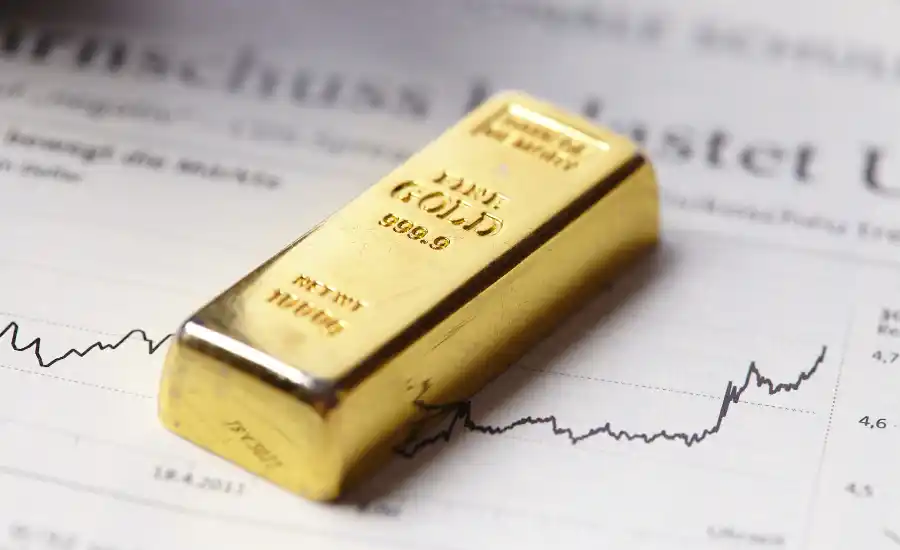
For centuries, gold has been used as a safeguard against risk and is one of the most popular products for Australian traders. In this article, we’ll explore how to begin trading gold CFDs in Australia and delve into effective strategies that traders can utilise.
What is A Gold CFD
A gold contract for difference (CFD) is a derivative that allows traders to speculate on gold prices without owning the physical metal. This trading option often includes leverage, allowing traders to manage larger amounts of gold CFDs with a smaller capital investment. However, it’s crucial to remember that while leverage can increase potential profits, it also increases the potential losses.
One of the advantages of trading Gold CFDs is the flexibility it offers. Traders can earn returns from both upward and downward movements in the price of gold, allowing for strategies that capitalise on market movements either way. This means traders have the option to go long when the price rises or go short when the price falls.
How to Trade Gold CFDs
Here are some key steps to start trading gold CFDs:
Open a Trading Account
To start trading gold CFDs, the first step is to open a trading account with a broker that offers these financial instruments. It’s crucial to choose a CFD broker e.g., Vantage, which is known for its exceptional customer support, competitive fees, and intuitive trading platform that caters to both beginners and experienced traders.
To make your trading journey even smoother, sign up for a live account with Vantage today and take your first step into the dynamic world of gold CFD trading.
Select the Underlying Gold Product You Wish to Trade
Traders should research and analyse the characteristics of each product thoroughly to ensure that the chosen product matches their trading goals and risk appetite. Explore options like XAU/USD, XAU/EUR, or XAU/AUD, each representing a different currency pair with gold.
These products vary in terms of liquidity, volatility, and market behaviour, influenced by factors such as currency strengths, geopolitical events, and economic indicators.
Identify Trading Possibilities Using Your Strategy
Develop a trading strategy based on thorough market analysis and your personal trading goals. Use technical analysis, fundamental analysis, or a combination of both to spot potential trading opportunities in the gold market.
Look for patterns, trends, and economic indicators that suggest movement in gold prices. This strategic approach will help you make informed decisions on when to enter and exit trades to maximise the potential returns.
Open Your First Position
Analyse the current market conditions and open your first position by deciding on the trade size and whether to buy (go long) or sell (go short) based on your strategy. Ensure you set a stop-loss order to minimise potential losses and consider using limit orders to capture profits at predetermined levels. Once you are ready, place the trade to execute your strategy.
Monitor Your Trade
Once your trade is active, monitoring it becomes crucial to successful gold CFD trading. Stay updated with real-time market data and use tools like price alerts and trading indicators to keep track of any significant changes in gold prices.
Regularly review your trading strategy against the market’s performance to ensure it still aligns with your financial goals. This proactive approach allows you to adjust your positions, like tightening stop-loss or taking partial profits, based on market movements or upcoming economic events that could impact gold prices.
Close Your Positions
Knowing when to exit a trade is as important as knowing when to enter. Close your positions either when your price targets are achieved or to cut losses if the market moves against your forecast. Utilise technical signals and market analysis to make informed decisions on timing your exit.
This might include closing trades manually or setting automated orders like stop-losses or take-profits, which execute when the market hits specified levels, thereby protecting your returns or minimising losses.
Why Trade Gold CFDs
Here are several reasons why trading gold CFDs stands out from traditional gold trading:
1. Liquidity and Market Dynamics
Trading gold through Contracts for Difference (CFDs) offers exceptional liquidity. As traders open CFD contracts with a broker rather than purchasing the asset directly, they can enter and exit positions swiftly. This liquidity ensures that gold is one of the most actively traded commodities, providing numerous opportunities for traders to adjust their strategies quickly in response to market changes.
2. Portfolio Diversification
Gold CFDs serve as a valuable diversification tool and a safe haven, particularly during economic uncertainties. As gold often holds its value and exhibits a low correlation with other financial assets like stocks and bonds, it acts as a stabilising force and a safe haven in a diversified investment portfolio. This makes gold an attractive option for hedging against market volatility and economic downturns.
3. Protection Against Inflation
Gold has historically maintained its value, making it a reliable safeguard against inflation. In times when fiat currencies decline due to economic pressures, the price of gold tends to increase, preserving the purchasing power and value of an investor’s portfolio. This intrinsic property of gold provides a measure of security amidst fluctuating economic conditions.
4. Automated Trading
Advancements in technology have transformed gold trading, with CFDs enabling the use of automated trading systems. These systems can operate 24/7, capitalising on gold’s price movements even when traders are not actively monitoring the markets. Integration of artificial intelligence (AI) and machine learning further enhances the effectiveness of these systems, potentially increasing trading success.
5. Accessibility and Convenience
The digital age has made trading gold CFDs more accessible and convenient than ever. Online platforms offer tools like live charts, user-friendly interfaces, and instant market access from anywhere in the world. Whether a novice or an experienced trader, these platforms facilitate easy participation in the gold market, enhancing the trading experience with advanced technological aids.
Explore the dynamic world of Gold CFD trading today. Open a live account with Vantage and take advantage of our user-friendly platforms, complete with live charts and instant market access.
Gold CFD Trading Strategies
There are various trading strategies that traders can use when trading gold CFD. Here are three trading strategies to consider:
- Trend Following Strategy
This strategy focuses on identifying and following established trends in gold prices. Traders use technical analysis tools, such as moving averages, to determine the market trend direction.
Simple moving averages (SMA) and exponential moving averages (EMA) provide valuable insights into short-term and long-term trends. Additionally, the Relative Strength Index (RSI) is crucial for assessing momentum and identifying potential reversal points, indicating if gold is overbought or oversold.
Once a trend is identified, a trader will enter a long position if the trend is upward (buying) or a short position if the trend is downward (selling). The key is to stay with the trend until technical indicators suggest it’s ending or reversing, ensuring consistent profits from large, sustained movements.
- Range Trading Strategy
Range trading is effective in markets that aren’t showing a clear trend. Traders who use this strategy look for consistently high and low price levels that gold reaches, known as support and resistance levels.
With such a strategy, a trader would buy gold when it’s at the lower range of its historical fluctuation (support) and sell it at the upper range (resistance). This strategy requires careful monitoring of price charts to determine stable ranges and may involve frequent trading to capitalise on small price movements within the range.
This strategy capitalises on volatility spurred by economic news that impacts gold prices, such as changes in interest rates, economic uncertainty, or significant political events. Traders using this strategy must stay informed about upcoming news and analyse how events might affect gold prices.
Traders then position themselves to buy or sell based on their predictions of the market reaction. Timing is crucial in news trading, as the greatest price movements usually occur shortly after major news announcements.
Read our article covering some of the best gold trading strategies to help you improve your trading approach.
Gold CFD Trading Example
Let’s explore a hypothetical scenario to illustrate how trading Gold CFDs with the XAU/AUD pair compares to traditional commodity trading under similar market conditions.
Assumptions:
- Gold symbol: XAU/AUD
- Gold price: $100 per lot
- Trading timeline: 1 year
- CFD Leverage: 1:100
In CFD trading, leverage enables traders to control larger positions with a relatively small amount of capital. For instance, with a leverage ratio of 1:100, a trader can manage a significant position in the gold market by only putting down a fraction of the total trade value as a margin.
Example Scenario:
Imagine a trader decides to trade the XAU/AUD pair, aiming to control a position worth $10,000.
Calculation Details:
- Desired Position Value: $10,000
- Leverage: 1:100
Using the leverage of 100:1, the trader can open this $10,000 position by only using $100 of their own capital.
Trading Considerations:
While leverage can magnify profits, it also amplifies potential losses. Therefore, if the price of XAU/AUD decreases significantly, the losses incurred could exceed the initial $100 margin very quickly.
For this example, we’re ignoring potential fees such as overnight holding costs, which can accumulate and affect the profitability of long-term CFD positions. However, in real trading scenarios, these fees must be factored into the trading strategy as they can erode potential gains or increase losses.
Closing the Position:
If, at the end of the trading day the price of XAU/USD increases to $110 per lot, the position value would rise to approximately $11,000. If the trader decides to close the position at this price, the profit would be calculated as follows:
Potential Returns = Ending Position Value – Initial Position Value
Potential Returns = $11,000 – $10,000 = $1,000
This example demonstrates a straightforward profit calculation, reflecting a 10% increase in the price of gold over the year. The return of $1,000 from this trade underscores the usage of leverage in CFD trading, allowing traders to capitalise on market movements with a smaller initial fund.
Conclusion
Trading gold CFDs offers numerous advantages that make it a compelling choice for traders in Australia. By understanding the mechanics of CFD trading and employing effective strategies, traders can harness the volatility and liquidity of the gold market to their benefit.
Whether you’re a seasoned trader or just starting out, the flexibility and potential of gold CFDs make them a valuable addition to any trading portfolio. Remember to always consider the risks, especially those associated with leverage, and continuously refine your strategies based on market conditions and personal trading goals.
Unlock the potential of gold trading with Vantage. Open your live trading account today and benefit from the flexibility of going long or short on gold CFDs, all at competitive spreads.