Updated
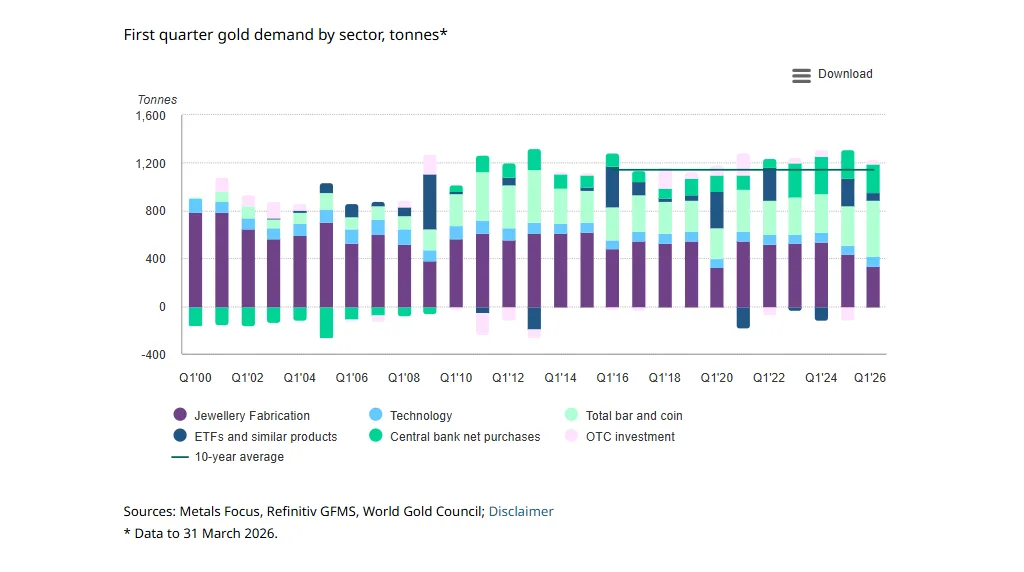
Gold demand reached a record quarterly value of US$193 billion in the first quarter of 2026, according to the World Gold Council’s Gold Demand Trends report1. High prices attracted investment demand, but the quarter also included a notable price correction.
Learning how to invest in gold therefore involves more than choosing an entry point. Beginners need to understand what they will own, the costs involved, and how each method responds to market movements.
This guide seeks to compare the main ways to gain gold exposure, from physical bullion to market-based instruments. It also separates long-term investing from leveraged gold trading, which carries a different risk profile.
Key Points
- Gold is often chosen for portfolio diversification purposes because its market movements often differ from those of equities and bonds.
- Physical bullion provides direct ownership, while gold-backed ETFs offer market access without requiring personal storage.
- Mining shares add company-specific risks because their value depends on costs, operations, management, and the gold price.
- Futures and contracts for difference (CFDs) are leveraged instruments, which can magnify both potential gains and potential losses.
- The appropriate method and allocation depend on an investor’s objectives, time horizon, costs, risk tolerance, and other factors.
Hypothetical case in point: If gold were priced at $5,000 per troy ounce, $1,000 would represent 0.20 ounces before dealer premiums, fund fees, spreads, storage, tax, or financing. A 10% price rise would increase the position’s gross value to $1,100, while a 10% fall would reduce it to $900.
Note: This illustration is educational and does not represent an actual client outcome or a forecast.
| Hypothetical Gold Move | Gross Position Value | Change |
| Gold rises 10% | $1,100 | +$100 |
| Gold is unchanged | $1,000 | $0 |
| Gold falls 10% | $900 | -$100 |
What Does Investing in Gold Mean?
Investing in gold means allocating capital to an asset whose value is linked directly or indirectly to the gold market. The form of exposure determines what the investor owns and which risks apply.
A bullion buyer owns metal. A shareholder in a physically backed gold ETF owns fund units, not a personally identified coin or bar. A mining shareholder owns part of a business, while a futures or CFD trader holds a derivative whose value references gold.
That distinction matters because storage, fees, counterparty exposure, income, leverage, and liquidity vary across methods. Gold should be assessed as one possible component of a broader plan rather than a complete portfolio.
Why Do Investors Consider Gold as an Investment?
The World Gold Council’s 2026 strategic-asset research2 describes gold as a liquid asset with no issuer liability or credit risk and identifies long-term returns, diversification, and liquidity as its main portfolio roles. However, investors should bear in mind that these characteristics do not remove price risk.
- Diversification: Gold may respond differently from equities and bonds during periods of market stress, which can broaden a portfolio’s sources of return.
- Liquidity: The global gold market supports transactions across bullion, exchange-traded products, futures, and over-the-counter markets, although the liquidity of a specific product can vary.
- Store-of-value role: Gold has a long history as a reserve and savings asset, but preserving purchasing power is more evident across long periods than every short interval.
- Diverse demand: Investment, central-bank reserves, jewellery, and technology create multiple demand channels, which can behave differently across economic cycles.
How to Invest in Gold: 5 Ways for Beginners
Five common routes provide different combinations of ownership, cost, access, and risk. Take note that the comparison below is educational, and asset availability and regulation vary by jurisdiction.
1. Physical Gold Bars and Coins
Bars and bullion coins provide direct ownership. The World Gold Council’s guide to gold assets3 notes that buyers generally “pay a premium above the spot price” and must arrange delivery, storage, and insurance.
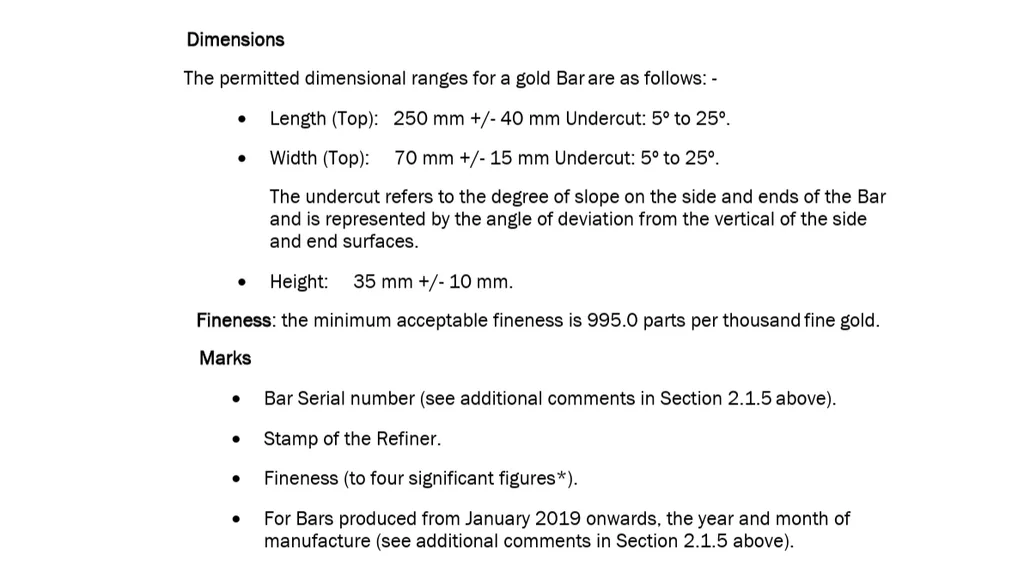
Purity and provenance also matter. Per the London Bullion Market Association (LBMA) Good Delivery Rules 20264, a minimum fineness of 995 parts per thousand is required for standard London Good Delivery gold bars. Retail products vary, so buyers should use reputable dealers and verify weight, fineness, buy-back terms, and custody arrangements.
2. Physically Backed Gold ETFs
Physically backed gold ETFs hold bullion and issue tradable fund units. They can provide price exposure through a securities account without requiring the investor to arrange personal storage.
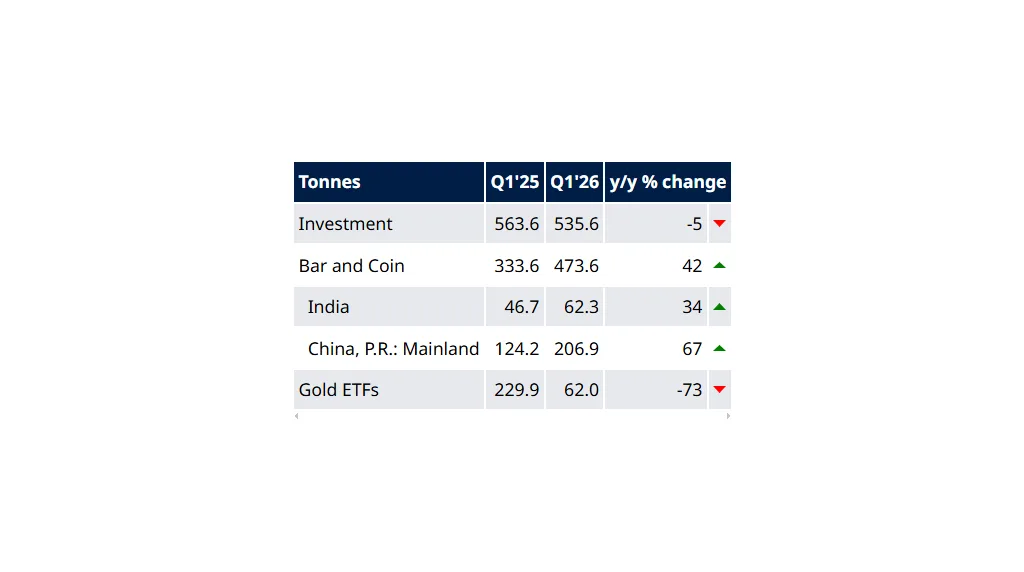
Fund fees, bid-ask spreads, tracking difference, custody structure, and trading currency require review. Global ETF holdings increased by 62 tonnes in Q1 2026, although regional flows differed and March included substantial US outflows, according to the World Gold Council’s Q1 2026 investment data5. This variation shows that ETF demand can reverse even during strong gold markets.
For fund-level comparisons, read Vantage Markets’ guide to the best gold ETFs.
3. Gold Mining Shares and Funds
Mining shares offer indirect exposure. A miner’s account balance and share price can respond to gold prices, but also to energy and labour costs, ore grades, financing, management, regulation, and political conditions.
A diversified mining fund can reduce dependence on one company, but it does not remove sector risk. Mining shares may move more sharply than bullion in either direction and may pay dividends only when company policy and financial performance allow.
4. Gold Futures
Gold futures are standardised exchange-traded contracts with defined sizes, expiry months, and settlement terms. CME Group’s gold futures and options fact card6 lists the main COMEX Gold futures contract at 100 troy ounces, while smaller contracts are also available.
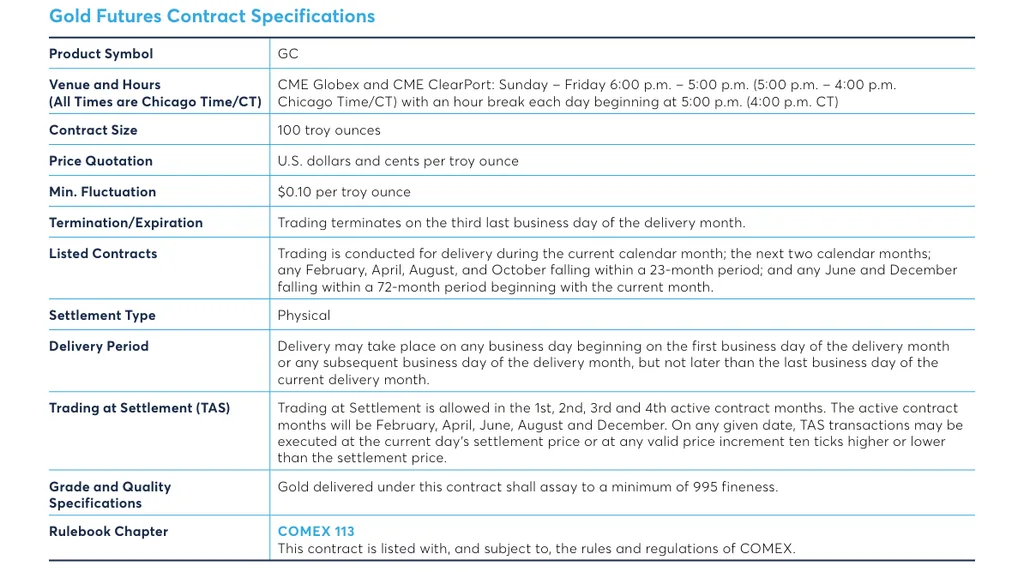
Futures require margin and may need to be closed or rolled before expiry. Leverage means a relatively small price move can create a much larger percentage change in the capital committed, so futures generally require experience and active risk controls.
5. Gold CFDs
Gold CFDs like XAUUSD CFD provide exposure to price movements without ownership of bullion or fund units. Traders can take long or short positions, but leverage magnifies both potential gains and potential losses. Spreads, overnight financing, execution, margin calls, and stop-out risk also apply.
Take note that CFDs are trading instruments rather than a route to owning the actual physical asset. To dive deeper into this topic, check out Vantage Markets’ gold trading guide or its gold trading guide for beginners.
Which Gold Investment Method Might Fit Your Goal?
Contrary to popular misconception, no gold investment method is universally preferable. Instead, a useful first step is to match the asset type to your investment goals while taking into account certain key considerations.
| Method | What You Hold | Main Costs | Key Risks | Typical Consideration |
| Bars and coins | Physical metal | Premium, storage, insurance | Theft, authenticity, resale spread | Direct ownership |
| Gold-backed ETFs | Fund units | Fund fee, spread, brokerage | Market, tracking, custody structure | Exchange access |
| Mining shares/fund | Company or fund shares | Fund fee or brokerage | Gold price plus business risk | Equity-style exposure |
| Futures | Exchange-traded derivatives | Spread, commission, margin | Leverage, expiry, rollover | Advanced hedging or trading |
| CFDs | Over-the-counter derivatives | Spread, financing, commission where applicable | Leverage, counterparty, execution, stop-out | Short-term price participation |
What Factors Should Beginners Consider Before Investing in Gold?
Before investing in gold as a beginner, it’s best to review the costs, ownership, liquidity, time horizon, and local rules. That’s because these factors can change the net result even when the gold price moves as expected.
1. Total Cost
Compare dealer premiums, bid-ask spreads, fund fees, brokerage, storage, insurance, currency conversion, and financing. Small recurring charges can accumulate over a long holding period.
2. Ownership and Counterparty Structure
Confirm whether the position represents metal, fund units, company shares, or a derivative. For vaulted products, review whether holdings are allocated or pooled and identify the custodian and redemption terms.
3. Liquidity and Exit Terms
A quoted market price does not guarantee that every product can be sold immediately at that price. Check trading hours, typical spreads, dealer buy-back policies, fund volume, settlement timing, and any withdrawal restrictions.
Related Article: Gold Trading Hours: When Does the Gold Market Open?
4. Time Horizon and Income Needs
Physical gold and physically backed ETFs normally produce no interest or dividend income. Investors who require cash flow should consider the opportunity cost relative to income-producing assets.
5. Tax and Jurisdiction
Tax treatment and product availability differ by country and structure. Investors should check local capital-gains, sales-tax, reporting, retirement-account, and product-eligibility rules with a qualified professional.
Is Gold a Good Investment?
Gold may serve as a diversifier, liquid reserve asset, or potential store of value, but suitability depends on the investor and the period measured. It produces no contractual cash flow, can experience sharp drawdowns, and may lag productive assets during strong growth markets.
The World Gold Council’s mid-year outlook for 20267 described a wide range of possible outcomes and recorded a Q1 high followed by a materially lower June price. The practical takeaway is that a strong long-term narrative does not remove entry-price or short-term volatility risk.
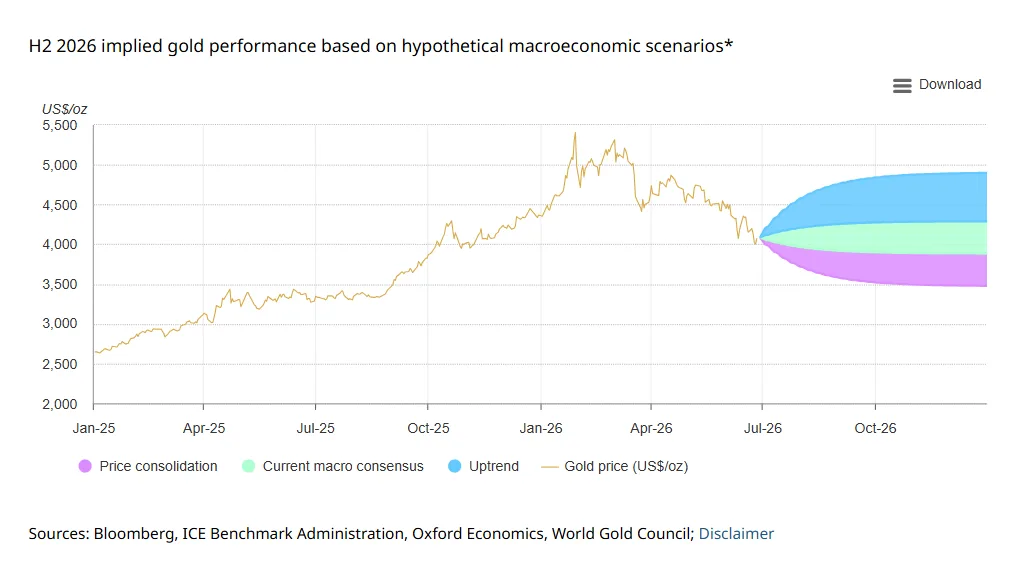
Rather than asking whether gold is universally good or bad, investors can ask what role it would serve, which existing exposure it would diversify, and whether the selected method’s costs and risks are acceptable.
How Much Gold Should a Beginner Buy?
There is no universal allocation. The amount depends on the purpose of the holding, total portfolio size, concentration elsewhere, liquidity needs, time horizon, and capacity for loss.
A beginner can define a maximum allocation before buying and reviewing it periodically. Price movements may push the position above or below that limit, creating a decision about rebalancing rather than encouraging an emotional response to headlines.
Someone considering a small initial amount should pay particular attention to fixed dealing and storage costs. These can represent a larger percentage of a small bullion purchase, while fractional market products can introduce their own fees and structural risks.
Vantage Pro Tip: Write down the purpose of the gold allocation, the maximum amount, the intended holding period, and the conditions for review before selecting a product. This creates a clearer comparison than choosing a method from recent price performance alone.
What Are the Main Risks of Investing in Gold?
Gold exposure carries risks even when it is used defensively. The specific mix depends on the exact gold instrument used.
- Price volatility: Gold can rise or fall sharply as expectations for rates, currencies, inflation, geopolitical risk, and investor flows change.
- No contractual yield: Bullion does not pay interest or dividends, which can increase its opportunity cost when yields rise elsewhere.
- Concentration risk: A large allocation can make portfolio outcomes overly dependent on one commodity.
- Storage and authenticity risk: Physical holdings require secure custody and reliable verification.
- Product and counterparty risk: Funds, vaulting arrangements, futures, and CFDs introduce structures beyond the metal itself.
- Leverage risk: Futures and CFDs can magnify losses and may trigger margin calls or forced closure.
Related Article: 10 Risk Management Techniques
Build Gold Exposure Around a Clear Purpose
Investing in gold begins with defining the role the asset is expected to play. Physical bullion typically prioritises direct ownership whilst ETFs generally prioritise exchange access. Meanwhile, mining shares add business exposure and derivatives introduce leverage and trading-specific risks.
Ultimately, the gold investing method you choose should follow your investment objectives, not recent price momentum. Costs, custody, liquidity, tax, time horizon, and capacity for loss all shape whether a particular form of gold exposure is appropriate.
The main downside about investing in gold is that gold’s long-term direction cannot be predicted with certainty. Investors seeking to respond to shorter-term price fluctuations may consider instruments such as gold CFDs, which allow them to take long or short positions without owning the underlying metal. However, leverage magnifies both potential gains and potential losses, while spreads, overnight financing, and execution risks may also affect outcomes. Consider practising gold CFD trading with virtual funds through a Vantage Demo Account before trading with real funds.
FAQs
How can a beginner invest in gold?
A beginner can gain gold exposure through bullion, a physically backed gold ETF, mining shares or funds, futures, or CFDs. The first three approaches involve ownership of metal, fund units, or shares, while futures and CFDs are leveraged derivatives. Costs, access, and risk differ materially.
What is the best way to invest in gold?
There is no universally best method. Physical bullion may suit someone prioritising direct ownership, while an ETF may suit someone prioritising exchange access and outsourced custody. Mining shares and derivatives introduce additional risks that require separate assessment.
Is gold a good investment for beginners?
Gold may be considered as one part of a diversified portfolio, but it’s not automatically suitable for every beginner. It can be volatile and usually produces no income. The decision should reflect the investor’s goals, costs, time horizon, and capacity for loss.
Can I invest a small amount in gold?
Some dealers offer small bars or coins, and market-based products may allow fractional positions depending on the provider. However, premiums and fixed fees can consume a larger share of a small allocation. Product structure and local availability should be checked before committing funds.
Is buying jewellery the same as investing in gold?
Jewellery usually includes design, retail, and workmanship mark-ups that may not be recovered on resale. Its purity can also differ from investment bars and coins. Jewellery may hold personal value, but it should not be assumed to track the bullion price closely.
Can gold lose value?
Yes. Gold prices can decline when interest-rate expectations, currency movements, market sentiment, or investment flows change. A safe-haven reputation does not guarantee positive returns or protection during every market decline.
What is the difference between investing in gold and trading gold CFDs?
Investing in gold commonly involves owning bullion, fund units, or mining shares. A gold CFD is a leveraged contract linked to price movements, without ownership of the metal. CFD trading adds financing, margin, counterparty, execution, and stop-out risks.
RISK WARNING: CFDs are complex financial instruments and carry a high risk of losing money rapidly due to leverage. You should ensure you fully understand the risks involved and carefully consider whether you can afford to take the high risk of losing your money before trading.
Disclaimer: The information is provided for educational purposes only and doesn’t take into account your personal objectives, financial circumstances, or needs. It does not constitute investment advice. We encourage you to seek independent advice if necessary. The information has not been prepared in accordance with legal requirements designed to promote the independence of investment research. No representation or warranty is given as to the accuracy or completeness of any information contained within. This material may contain historical or past performance figures and should not be relied on. Furthermore estimates, forward-looking statements, and forecasts cannot be guaranteed. The information on this site and the products and services offered are not intended for distribution to any person in any country or jurisdiction where such distribution or use would be contrary to local law or regulation.
References
- Gold Demand Trends: Q1 2026 – World Gold Council. https://www.gold.org/goldhub/research/gold-demand-trends/gold-demand-trends-q1-2026. Accessed on 21 July 2026.
- Gold as a Strategic Asset: 2026 Edition – World Gold Council. https://www.gold.org/goldhub/research/relevance-of-gold-as-a-strategic-asset. Accessed on 21 July 2026.
- How to Invest in Different Gold Assets – World Gold Council. https://www.gold.org/goldhub/how-to-invest. Accessed on 21 July 2026.
- Good Delivery List Rules 2026 – London Bullion Market Association. https://cdn.lbma.org.uk/downloads/Publications/2026/Good-Delivery/Good-Delivery-List-Rules-2026-FINAL.pdf. Accessed on 21 July 2026.
- Gold Demand Trends: Q1 2026 – Investment – World Gold Council. https://www.gold.org/goldhub/research/gold-demand-trends/gold-demand-trends-q1-2026/investment. Accessed on 21 July 2026.
- Gold Futures and Options Fact Card – CME Group. https://www.cmegroup.com/trading/metals/files/fact-card-gold-futures-options.pdf. Accessed on 21 July 2026.
- Gold Mid-Year Outlook 2026: Point Break – World Gold Council. https://www.gold.org/goldhub/research/gold-mid-year-outlook-2026. Accessed on 21 July 2026.